


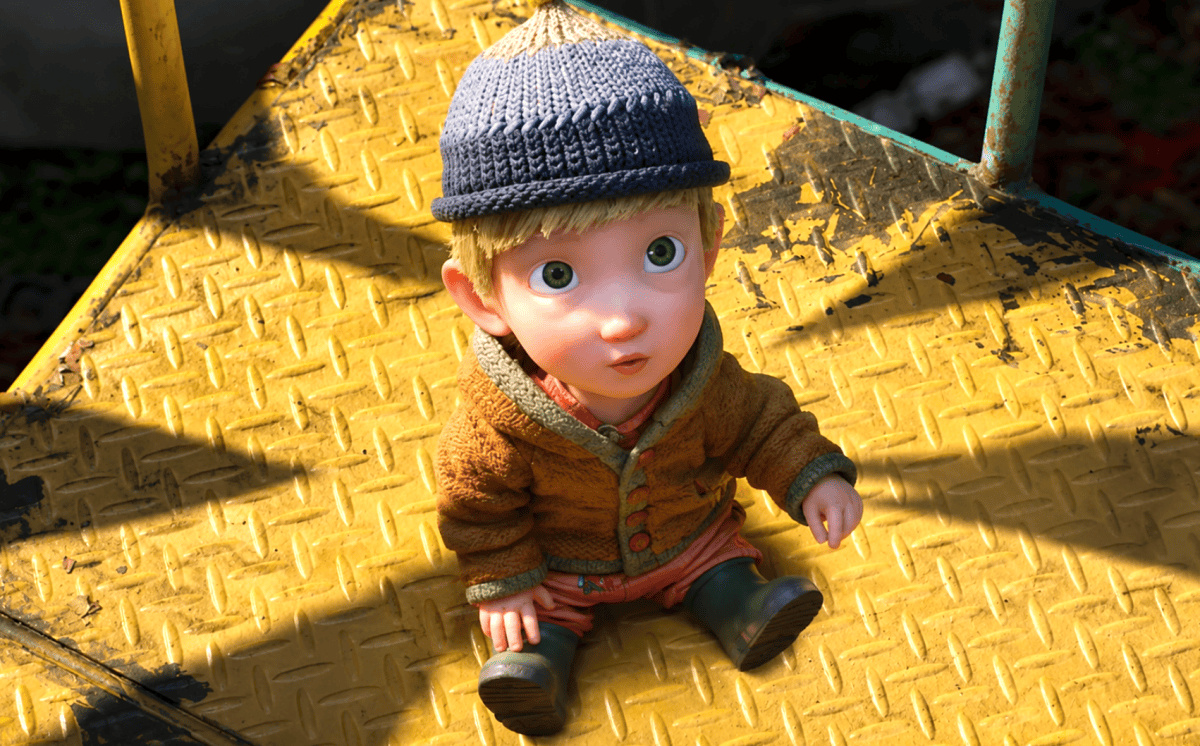
2026 has been a year of era-defining cinema between The Odyssey, Backrooms, You Can See Everything, and now Wildwood.
All films are a product of their respective cultures and, in that, say something about what produced it. Yet, it is a certain type of film that feels like a significant inflection point. Whether intentional or (likely) not, these films have captured a moral and spiritual transformation at the heart of society. Just as The Odyssey identified the moral failure of Western civilization post-World War II especially as it related to hospitality and masculinity, Wildwood is an allegory about the dissolution and distortion of the family as the crux of American decline. Admittedly, I am not sure this was the intention, but it is in the text nonetheless. Laika’s sixth feature film, an adaptation of The Decemberists frontman Colin Meloy and illustrator Carson Ellis’ book series of the same name, may be the finest technical achievement, too, in animation history.
Prue (Peyton Elizabeth Lee) is tasked with watching her brother Mac (Arthur Knight) while her parents (Jake Johnson and Maya Erskine) are out and about in Portland, Oregon. While at a playground, a murder of crows snatch Mac and take him to the fantastical land of the Impassable Wilderness just outside the city. This world is divided into various warring factions: the grieving mother Alexandra (Cary Mulligan) who controls a coyote army and wields the dark powers of the technology, Alexandra’s buffoonish bureaucrat cousin Lars (Marc Evan Jackson) who controls the urban part of the wilderness and wars with the coyotes, and the rebel bandit army who seek to reclaim their ancestral land from the machinations of both Alexandra and Lars are just a few at play here. There are a lot of moving parts that are generally well-handled considering the constraints of a feature-length runtime. I do wish we could have learned more about some characters, like the Avian Principality leader Owl Rex (Richard E. Grant). The closest analogue in terms of how the film feels both narratively and pacing-wise is the Lord of the Rings trilogy.
This is an epic.
An important disclaimer is that Wildwood is absolutely not for children. In addition to the setting’s immersion in Pacific Northwest progressivism, the film is unsparingly violent with cursing and other adult themes as well. One has to have a solid moral and theological grounding in their own right to appreciate this narrative. The story critiques at least some of what it seemed to initially present uncritically. Show the kids The Chronicles of Narnia: The Lion, the Witch, and the Wardrobe instead.
Wildwood, in particular, tracks the bifurcation of modernity into nihilistic, posthuman technoapocalypticism and literally nature worshipping paganism. The 2010s American culture that fostered the New Atheism, Hank Green-esque scientistic superiority, and initial adulation of the Silicon Valley technological revolution has given way to a new paradigm. The romanticization of tech has been hurt by doomerism, mass layoffs, and the impact of AI expansion on consumer prices, and, if they are not religious or spiritual, being unaffiliated seems to be the more dominant position for youth than professed atheism (fedoras are at least partly to blame). “Facts and logic” seems to hold less cache now. Hank Green himself was involved in a scandal this year after being caught using an AI script for a video. Put briefly, the veneer of rationalism has been chipped away at and replaced by an experiential emotionalism.
In my own field of psychology, the two leading trends exactly encapsulate this moment. On the one hand, AI companies have infiltrated the highest levels of the field’s institutions. OpenAI was a top-tier sponsor for the American Psychological Association’s convention and the APA opened the completely unfrighteningly named Center for Behavioral Science and AI this year as two major examples. On the other side, the other recent trend is “indigenous psychology”, or “the psychology from within the matrix of the native culture, based on their history, language, arts and common Experience.” This subfield calls for cultural humility and the integration of traditional medicines and worldviews. Nature-based therapies especially have attracted a new wave of interest.
The core conflict culturally and in the film is between nature and technology. As Catholics, we know that neither is the complete solution. Without getting into exact spoilers, the genius of Wildwood is how the film reveals the folly and some merits of those who worship both.
What motivates and is caught in the midst of the conflict is the family. The characters sell out control of their reproductivity and family to dark technological and magical (perhaps even “satanic” as one character says) powers. This perversion of the family is the instigation for the destruction of natural order. All of the themes, including a commentary on colonialism, are still wrapped up in this primary disruption.
In addition to the narrative and thematic side of the film, the stop-motion animation is easily the best ever done. A climactic battle sequence, in particular, is a breathtaking achievement. Director Travis Knight has said this film took sixteen years to make and it shows. The voice cast is also solid. Awkwafina makes an obligatory appearance here, but Peyton Elizabeth Lee, Cary Mulligan, and Jake Johnson are particularly good.
Laika continues their streak of animation mastery and complex, emotional stories in Wildwood. Unfortunately, it seems doomed to be underappreciated yet again, too. I do recommend it to adults interested in a fantasy epic that is smarter and more nuanced than its initial appearance.
Wildwood is now playing in theaters.
If you like stop-motion animation, maybe check out this movie as well from our List!
100 Movies Every Catholic Should See #8: The Miracle Maker (2000)

The Miracle Maker retells the story of the Gospels for children, blending stop-motion clay puppetry and hand drawn 2D animation to bring Jesus to life. A joint Russian-Welsh production from animation studio Cartwn Cymru, the film actually premiered in 1999 on Welsh public television in the Welsh language before getting a star-studded English voice cast…
