


At the request of the filmmakers, I will try to make the spoiler section as roped off as possible. I highly recommend you go into this without reading too much about it, as the filmmakers very clearly stated they wish for the audience to partake in the same journey they did. I wholeheartedly recommend you see this film in a theater.
What truly goes on in a sociopath’s mind?
True crime documentaries have become a pop culture staple. Every streaming service in existence has its own true crime documentaries/ docuseries that all seem to follow the same formulaic genre. Hardly ever do they break the mold like the fantastic Morris documentary The Thin Blue Line, or redefine the medium like Joseph Oppenheimer’s haunting, magnificent The Act of Killing. In 2026, however, in a perfect storm of misfortune, circumstance, and intuitive filmmaking, Lance Oppenheim and the fantastic Nathan Fielder created You Can See Everything, the greatest film of the 2020s, and it will change the world of cinema forever.
You Can See Everything follows the infamous fraudster and felon, Elizabeth Holmes, through the 34 days before her 12-year incarceration. Nathan Fielder was granted unprecedented access into her personal life (at her request to A24), and what transpires is a surreal, complex, and haunting story that I have thought of nonstop in the 3 days following my initial viewing.
Begin Spoilers
You Can See Everything truly adheres to its title and then some. It is fundamentally a meta-documentary that not only analyzes the craft of understanding a project for a documentary, but forces us to analyze ourselves. Oppenheim and Fielder expertly crafted a cinematic Rorschach test that blurs the line between reality and truth without being subversive to it. Following a similar vein to Orson Welles’ F For Fake, the final product begs for truth and authenticity. It wants nothing more than to tell the total, unbiased truth. This is all it wants at its core, and what Nathan and Lance try their absolute hardest to find, even partially switching formats to find it. The central conflict and resistance is supplied by none other than the film’s subject matter: The Holmes family. In an excellent interview given by the New York Film Festival, Lance Oppenheim stated, “It felt like we were in the Zone from Stalker, every day… no one could agree on what was real. Every day everyone would debate what happened or what they thought, and no one could ever agree.” Their goal was to capture this feeling and deliver it to audiences, and they more than achieved.
The Holmes family is one that seems too insane to be real, but too nuanced and detailed to be fake. They are, by every definition, an enigma. The only surefire conclusion that can be gathered with You Can See Everything is that they are without a doubt batshit crazy. So much so that this took much time to discern and figure out. Never has there been such a group of manipulative and compulsive liars ever captured on film, who go to such extents that I am not sure what is truth and what is fake, even now. Just when you think you have this group figured out, something else unexpected is discovered or occurs that throws off the scent from any real or logical conclusion. Who has true agency? Who is the manipulator? Who is using who? Is everything cryptic, or straightforward? Are they dumb, or do they refuse accountability? Are they genuine or insincere? Why did Holmes learn how to be a human from the same lizard people presentation that Zuckerberg used? All of these questions and more are asked constantly, and never quite answered. Chiefly, the question of “What is going on in this person’s head RIGHT NOW?” is the core and daunting question that can never truly be answered.
The human brain is equally fascinating and terrifying. We, the general 95% of the IQ bell curve, find it fascinating to examine the extremes of the bell curve, those with exceptionalities. In particular, we love the outliers and try to find something in them to learn about ourselves as a whole. This pursuit of the outliers applies not only to, say, raw intelligence, but to things such as morality and ethics. We venerate saints and honor them, while at the same time finding deep intrigue in individuals such as Ted Bundy or Adolf Hitler. There’s something about seeing the highest of the high and the lowest of the low that compels us to examine ourselves through them. While the Holmes family wouldn’t particularly place extremely high on a moral bell curve, so to speak, You Can See Everything clearly shows that ALL PEOPLE are deeply flawed. In reality, most people are complex enough that you could never truly understand them. The Holmeses may seem like an extreme caricature of dishonesty and manipulation, but we all can be susceptible to imperfections. Everyone has lied at some point in their life and will freely admit it. When Fielder asks this simple question to Elizabeth Holmes, however, she cannot even answer it in a straightforward manner.
The theological statement of “The only unforgivable sin is the one we don’t repent of” is so real in You Can See Everything that you can practically touch it. Never have I seen individuals refuse so earnestly and frequently that they have never done wrong when the contrary exists for the world to see. Elizabeth simply does not see any fault in what was done, and Billy Evans nurtures this in his own bizarre manner. Liz’s refusal to answer practically any question in a straightforward manner only continues to work against her in the eyes of the public, and her continued fixation on semantics is stereotypical behavior for pathological liars. Unsettling eye contact throughout the extensive interview session only adds to the feeling that “I am being lied to”.
Being submerged in this web of dishonesty was enough to have me questioning everything, and the film isn’t even 3 hours long. I’m honestly shocked Nathan Fielder was able to maintain any sort of sanity while the events depicted were transpiring. Due to the Holmes family continuously asking Nathan questions, the production team decided it would be easier to go against Fielder’s initial request to not be featured. This move to make him an actual character in the film adds so much, allowing him to be just as vulnerable as Liz or Billy. His honesty and ability to look into situations is the lifeblood of the film, and will most likely be replicated in the future. Bringing in Amanda Seyfried to reenact real exchanges (as was done originally in The Thin Blue Line) was a stroke of brilliance that brought a whole new aspect to the conversation: The role of entertainment in public events. Seyfried seems to mean well and less performative than you would expect bringing in an actress would seem, but she adds valuable insights to the situation. Even her deflection of responsibility for contributing to the vilifying of Holmes to the masses was fascinating. Never has the quote “It’s TV” sounded so complex.
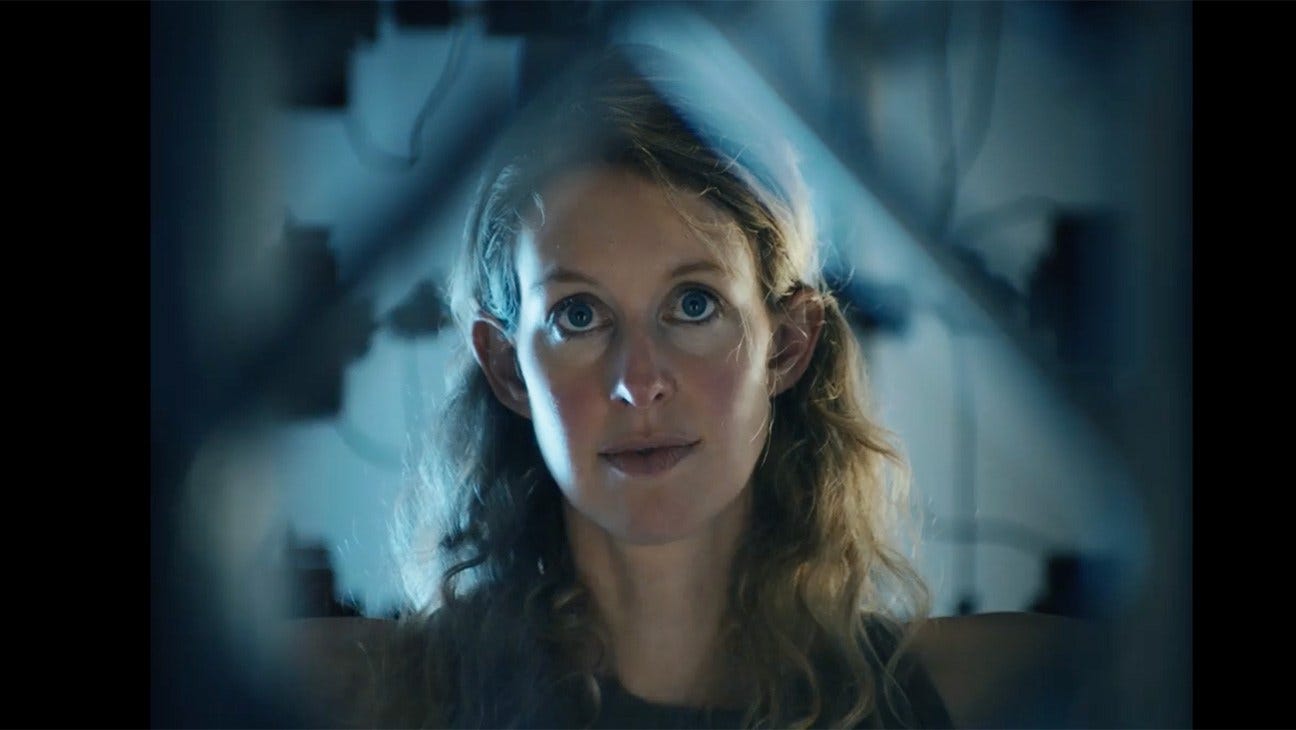
This film is OUTSTANDING in its craftsmanship. I full heartedly expect You Can See Everything to win quite a few Academy Awards, primarily being in cinematography. The film quality shots that were gathered within an only slightly controlled setting are going to be studied in film school and are a breakthrough for the indie film industry. Continuous face shots draw undeniable parallels to Bergman films, but serve to truly capture raw reactions and moments that add to this complex puzzle. Single light sources were used for most of the shots, and natural lighting filled the rest. David Bolen already had a solid outing with Primetime, but this is nothing short of a technical marvel, with some shooting locations and equipment having to be transported and set up in under 30 seconds.
Fielder acts as a fantastic pointman and directs well, with Lance Oppenheim really bringing the whole twisted portrait together in a way that feels distinctly him. I pray that these two will collaborate on future projects in such a manner, because the end result this time around was flawless. It’s difficult to say if acting Oscars will be won, as most of the film is reality, but I could be proven wrong. Ari Balouzian delivers a simple yet haunting score that complements the film, similar to how Philip Glass’s did for Koyaanisqatsi. Oppenheim and Fielder should absolutely win the Directing Oscar, as their creative chemistry is the best I’ve seen since the Coen Brothers.
Ultimately, if You Can See Everything becomes the first documentary in history to win Best Picture, it will be a well-deserved win. It is the best film of the 2020s (so far) that will change the art form for the better. Innovative and fresh storytelling combined with the surreal and dishonest world of the Holmeses creates a truly unique cinematic experience that needs to be seen by all in a packed theater. I am already planning my next viewing and plotting when I can get this total masterpiece on physical media.

Of course Nathan would make the best movie of the 2020s, he graduated from one of Canada's top business schools with really good grades.
My husband and I saw this for our wedding anniversary (I know insane pick), but we both were so relieved we had each other. Some of my favorite moments were when we started laughing in the theater because it was so uncomfortable. There’s one scene where Nathan shows Elizabeth and Billy a famous comedy skit and I still think about it.