


About twenty people were packed into the small storefront of the now-defunct Flying Squirrel, a retro toy store in Pittsburgh. In the middle of the back of the room, a 16mm projector sat just below head level. It was showing the 1948 noir He Walked By Night, famously shot by John Alton who pioneered the genre’s shadowy aesthetic. In the iconic climax, protagonist Roy Morgan (Richard Baseheart) is running from the police through the Los Angeles sewer system. The tunnels are dim, claustrophobic, and slickly wet. Rain falls outside on the concrete. And as the projector whirred, you could almost feel a little humidity in the room. That was my first time seeing a film on 16mm, a small, loud, and grainy enough print that it is hard to forget you are watching a film. Yet, the filminess of the format does not detract from the tactility of the narrative. In fact, they are intricately correlated.
The most sought-after movie ticket right now is to see The Odyssey on IMAX 70mm, a combination only available in a few dozen theaters globally. Screenings have run 24/7 in some locations. I barely saw it on IMAX myself (LIEMAX is the only option in the Burgh). What is remarkable about the popularity of the film, which began back with Oppenheimer, is the renewed interest in film prints, practical effects, and tactility. It was a total contrast to see the trailer for Avengers: Doomsday before The Odyssey, which looks completely fake and alien, even by superhero standards.
A great deal of ink and camera space has been spilled on this incoming shift in cinema. Like Stories of Old released a wonderful YouTube video last year about the need to reclaim texture and realism in movies. He is absolutely right on his points, including how even highly digital films like Avatar (2009) can still feel real. Yet, there is something even deeper at play here that relates to our own embodied nature and connection to our environment many have failed to mention. To understand this, I would like to call attention to two documents from the papacy of Pope Francis: the encyclical Laudato Si and his address to artists on the 50th anniversary of the inauguration of the Vatican Museums’ collection of modern art.
In his brief address to artists, Pope Francis makes a few key points that can guide our interpretation of the current moment. First, he describes the relationship between Catholicism and art as “natural and special”. The natural relationship is in the quest of both to understand and appreciate the complexity and ambiguity of life. It is special because of the effect that Catholic faith and symbolism has had on the history of art. It is to the former that he draws the great paradox at the heart of art: that it is something new, even artificial, that really does have something meaningful to say about our current reality. Pope Francis calls “the psychology of artists: the ability to press forward and beyond, in a tension between reality and dream”.
How does art, especially cinema, accomplish this? Pope Francis identifies two critical elements to great art: humanness and harmony. He understands these almost as being in tension. Humanness is the messiness of lived existence in both its wretched weaknesses and redemptive triumphs.
He writes, “Often, as artists, you attempt to plumb the depths of the human condition, its dark abysses. We are not all light, and you remind us of this. At the same time, there is a need to let the light of hope shine in that darkness, in the midst of our selfishness and indifference. Help us to glimpse the light, the beauty that saves.”
Harmony, on the other hand, is a capacity for differentiating between a genuine and a false hope. He calls harmony “the operative virtue of beauty”. A common criticism of some Christian films is that they can rely on a false hope that feels disingenuous. A real hope is one rooted in humanness, but a humanness that can transcend itself through grace. The films of Terrence Malick are all incredible examples of real hope.
Dreams of Heaven | The Filmography of Terrence Malick (Series #11)

Never has there been someone so mysterious in the world of cinema as Terrance Malick. A man shrouded in mystery who practically never does interviews, does not allow cameras on his sets, or lets people into his creative process, Terrence Malick is the most private man working in the film industry today. Despite all the secrecy,…
Harmony is also the possibility of unity within a rich multiplicity. It allows for the human person and even the world broadly to retain their individuality while participating in the true, the good, and the beautiful. No two saints are saints in quite the same way, after all. Catholics should not be afraid of understanding the world as it is experienced or encountered because we know that it will ultimately point to God. It is why I feel that horror can be an enriching genre when done correctly.
Harmony and humanness are in a reconciliable tension, one that is borne out many times over in art. If all the multiplicity of human experience did was to Balkanize the meaning of everything, then art would have no purpose. Why do we never tire of great love stories? Because the uniqueness of every person allows for indefinite manifestations of love that can all still point to love in its harmonious form. Art being an expression of human finitude is necessary for art to be open to the transcendent.
It would appear that audiences want their art to feel human. AI art has thus far not been successful and there has been a greater backlash to recent films that look especially fake. The biggest studios and brands are catching on. While Avengers: Doomsday still doesn’t look great, Spider-Man: Brand New Day is the most real-feeling entry in the franchise in a long time. Unlike No Way Home shot during the pandemic, the production team decided to shoot in real locations when possible. And as effects-heavy as it remains, the change makes a significant, qualitative difference. Other examples include the gap between the look and feel of the shot-on-location Andor and that of the other Star Wars shows. Looking forward, Black Panther III will be filmed in large format 70mm.
The important distinction, though, is not between practical or digital effects. It is between worlds that feel experienceable and those that do not. This is what I mean by “cinematic ecology” in the title. Pope Francis called this “cultural ecology” more broadly in Laudato Si’. To be human is to exist in a world whose meaning is structured and formed by human culture and the environment. Pope Francis writes in the encyclical, “Culture is more than what we have inherited from the past; it is also, and above all, a living, dynamic and participatory present reality, which cannot be excluded as we rethink the relationship between human beings and the environment.”
Cinematic ecology is the power of film to reflect how transcendent qualities are made manifest immanently through the being and relation of Creation participating in the grace of God. This power cannot be divorced most importantly from humanness and secondarily from the ecological environment that humans are embedded in.
AI “art” puts cinematic ecology and thus the reality of the unreal in jeopardy. This is not to say that AI is divorced from reality. It is quite the opposite: AI operates by collating all of human experience and knowledge into a flattened false unity.
The resurgence of physical film with formats like IMAX 70mm makes this philosophical or theological sense of art literal. As time goes on, film prints change and degrade, becoming increasingly unique substantiations of the film. The ecology of the filmic medium can inform, although not substitute for, the humanness of the content.
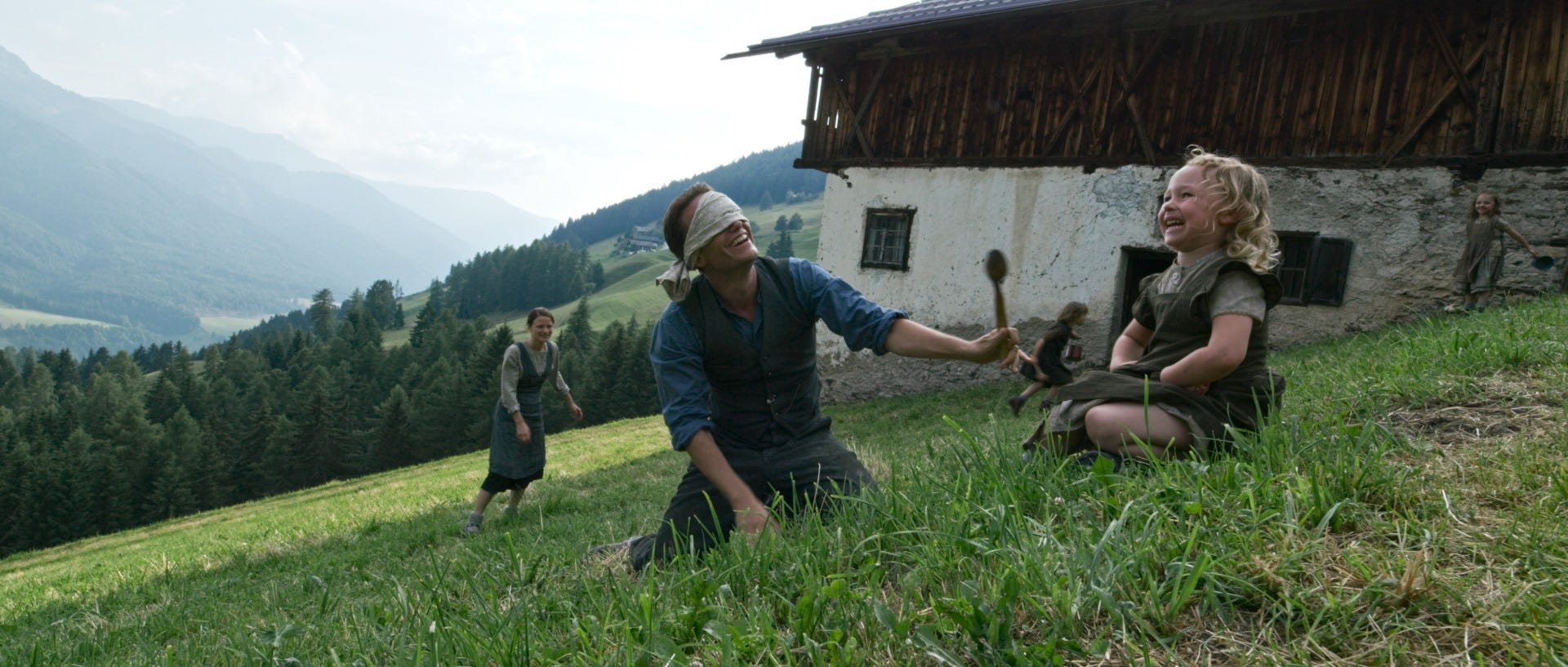
And this leads me to my final point: that authentic humanness in art points beyond the human to the environment and to God. Pope Francis quotes in Laudato Si’ Pope St. John Paul II who said in 1990 that “the relationship between a good aesthetic education and the maintenance of a healthy environment cannot be overlooked”. Earth is the (literal) ground of our experience. The philosopher Martin Heidegger wrote that “We seek the actuality of the artwork in order actually to find there the art prevailing within it.” The fiction of the artwork is derived from the reality of it. I believe it is no coincidence that arguably the two greatest Catholic filmmakers of all time Andrei Tarkovsky and Terrence Malick are especially good at capturing the natural world. Just as one can appreciate the transcendent and the possibility of human experience in a film, so too can one appreciate the grandeur and value of our environment.
