


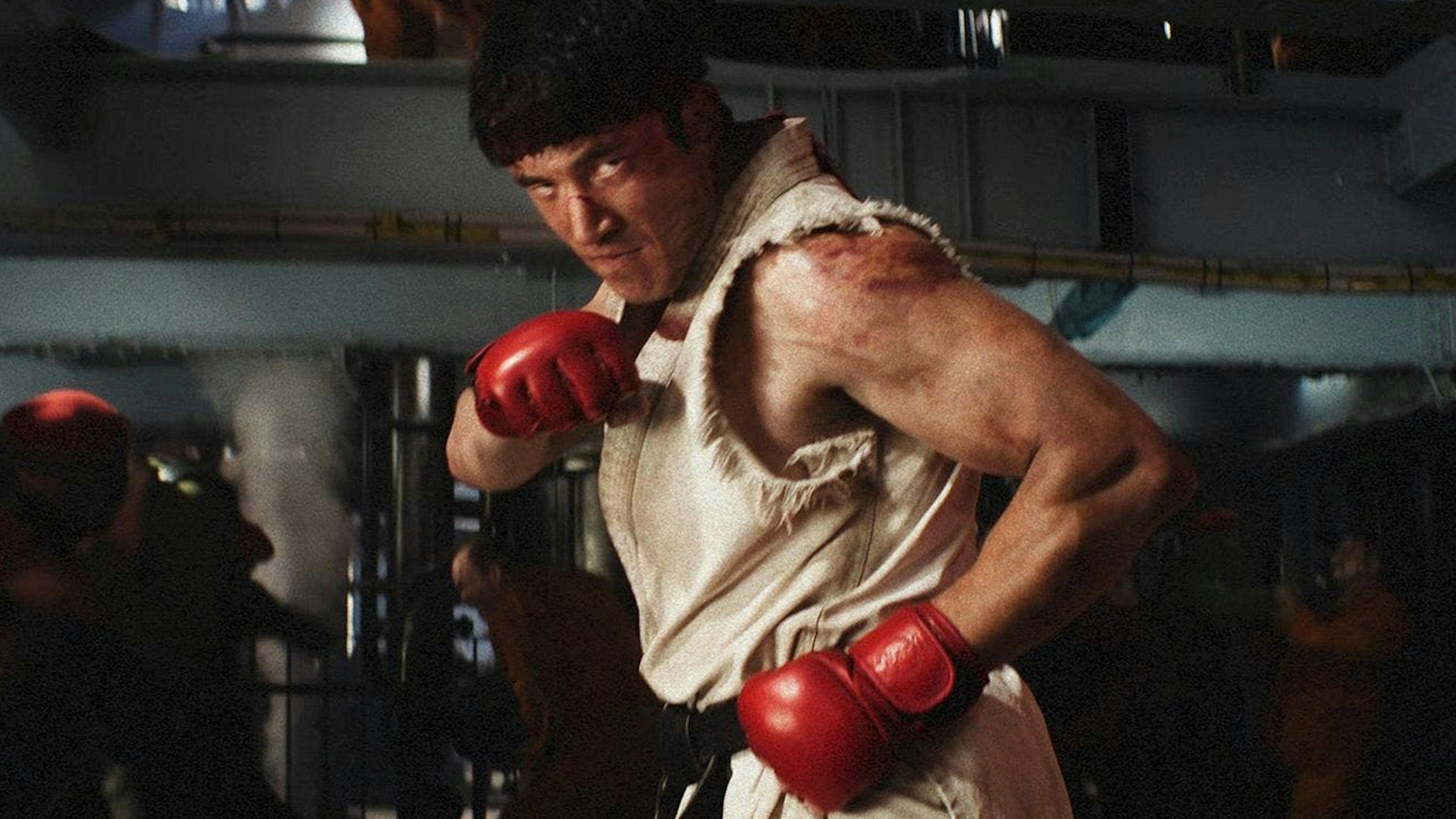
The “video game movie curse” has rung especially true when adapting fighting games.
While their striking visuals might be tailor-made for a big screen, they often lack story and become difficult to adapt as a result. Case in point: the 1994 Street Fighter movie, a very loose adaptation of Capcom’s game that was really made just to show off how cool Jean-Claude van Damme is.
Since fighting games usually revolve around tournaments or story-less multiplayer, they are often left very open to screenwriters, especially those who aren’t gamers. But as soon as I heard Kitao Sakurai (The Eric André Show) was working on a new adaptation of Street Fighter, I was excited. Being a fan of the games, I knew he could craft a fun take on the universe. The result was a film that’s very aware of its zaniness, and uses it to give space for some genuine character growth that may be setting up a solid film series.
Street Fighter opens with a beautiful animated sequence from Titmouse (The Venture Bros, Critical Role). We are immediately introduced to Ryu (Andrew Koji) and Ken (Noah Centineo), lifelong friends competing in fighting tournaments under the mentorship of Sensei Gouken (Don Lee). After Ryu wins the 1986 World Warrior Championship, a clever nod to the game’s original Japanese title and release date, he goes into hiding after threats from the demon Akuma (Roman Reigns). Ken chooses to stay in Japan and becomes a washed-up celebrity managed by his lecherous buddy Dan (Andrew Schulz). In a flash-forward to 1993, M. Bison (David Dastmalchian), the psychic dictator of the faraway land of Metrolao, announces a new World Warrior tournament. After an invite from Interpol agent Chun Li (Callina Liang), neither Ryu nor Ken can resist an opportunity to compete. But what they don’t know is that it’s all a trap for Bison to absorb all the fighters’ power and become more powerful himself, in a close adaptation of the little story in Street Fighter II.
A major high point of the film is that the cast is terrific. Koji and Centineo sell the main characters’ brotherhood incredibly well, and Liang’s Chun Li makes for a perfect voice of reason to round out the overly serious Ryu and goofier Ken. Cody Rhodes’ performance as veteran fighter Guile is miles better than van Damme’s flat performance in the 1994 adaptation. David Dastmalchian is the only one who had big shoes to fill, as Raúl Julia’s intense, downright creepy take on Bison is the best part of the older film, but Dastmalchian’s interpretation feels more like a cartoony video game final boss, complete with mid-battle banter. It’s exactly how fans would expect Bison: a loud, campy, power-hungry dictator. I was genuinely surprised by Bison’s masked assistant Vega, played by country musician Orville Peck. In a cinematic landscape where most henchmen are brutes or idiots, Peck’s menacing take on Vega helped make Metrolao more of a genuine threat, and proved my point that we need more convincing villains in video game movies. He often reminded me of Brad Dourif’s Wormtongue in the Lord of the Rings movies, yet it worked perfectly for the nature of Street Fighter’s villains.
There’s not many fight scenes, but they are, expectedly, the best part. What really stands out beyond their breathtaking choreography is how natural the characters’ signature moves are. We see several attacks from the games come to life, often supplemented with their classic music and sound effects, and none of them feel out of place in the reality Sakurai is selling. Fans will be expecting a Hadouken or Shoryuken, the classic “Shoto” moves of Ryu and Ken, and the way they’re integrated as a narrative device is interesting. The Hadou, these moves’ power source, is earned after facing adversity in a fight, and leads to some very satisfying moments when the heroes are under pressure. It was rewarding to see Ryu’s perfectly timed Hadouken when taking down “beast-man” Blanka (Jason Momoa, in a cameo that was way too short), after 15 minutes or so of him just doing standard karate moves.
What makes this film stand out from other video game adaptations is the strong focus on brotherhood and healthy male friendship, which is very rare in contemporary cinema. Ryu’s secretiveness and Ken’s rashness are viewed as obvious flaws in their character, but reconnecting after some time apart helps them become more self-actualized, taking on a common enemy and looking uber-cool while doing so. It’s like Lethal Weapon but with karate and fireballs. Ken’s journey stands out because he rarely gets any spotlight in Street Fighter media – he’s just the “Player 2” character, the Luigi to Ryu’s Mario. Exploring his deep-seated insecurities and desire for personal excellence was a clever storytelling choice, and the stakes of the tournament and his friendships help sell it. Noah Centineo really nails the necessary vulnerability and creates a very positive male role model with his believable growth not unlike John McClane or Martin Riggs. Hopefully this leads to more action movies following suit and returning to the tradition of a more virtuous male lead.
Sakurai’s Street Fighter is exactly as loud and silly as you’d expect a Street Fighter movie to be. Sakurai’s deep understanding of the classic fighting game and the camp medium help him create an imaginative adaptation far from a direct 1-to-1 match to the games. Complete with a neon-retro aesthetic and sincere emotional weight, the film delivers more than what it would seem and is an entertaining yet genuine watch. If there’s a second round, I’ll definitely be seated for it again.
‘Resident Evil’ | Zach Cregger Delivers Another Darkly Hilarious Package

I’ve never played a Resident Evil game.
