


I’ve never played a Resident Evil game.
Ok, ok. Not entirely true. I’ve played 30 MINUTES of a Resident Evil game. For context: horror games are not my thing. I’m a notoriously jumpy, reactive person when it comes to horror (I was the guy people invited to watch horror movies in college, not necessarily because I really liked horror movies, but because they wanted a guaranteed screamer in the audience). So when two of my friends made me play 30 minutes of a Resident Evil game a few months back, they knew exactly what they were doing. What proceeded was me jumping, reacting in disbelief, screaming, straight up stopping the game at points to accost my friends for making me do this, and….perhaps an accidental bad word or two.
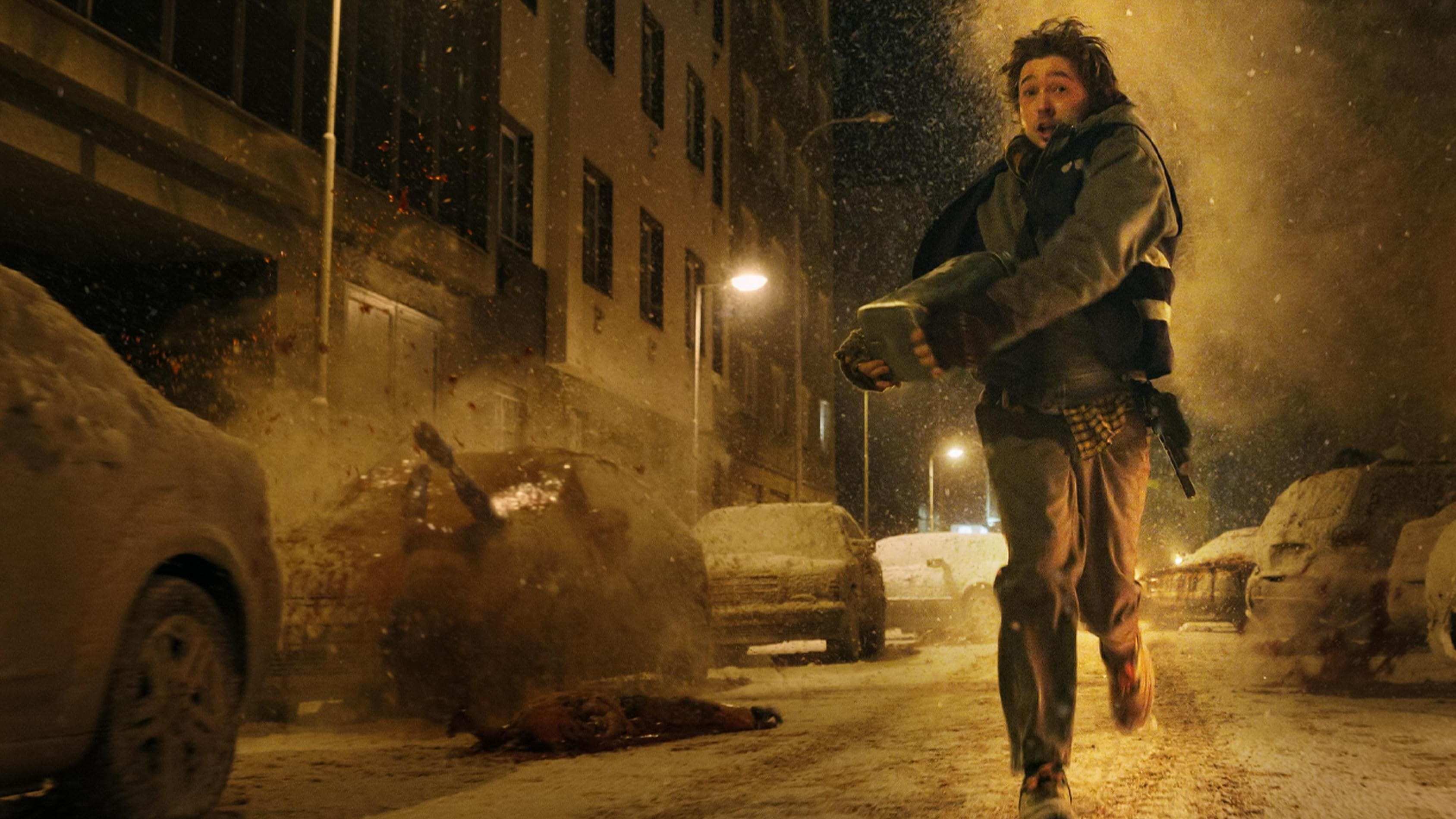
The brilliance of 2026’s Resident Evil is that the movie is the exact same experience. Rather than making a straight adaptation of the video game series, the movie instead makes of an adaptation of what’s it’s LIKE to play Resident Evil. The result is a lean, mean, propulsive, and often very funny movie, and one where I’m not sure I’ve ever related more to a protagonist. When Austin Abrams’ Bryan screams hysterically as he runs away from the most horrific night of his — or anyone’s — life, well, that’s me. In fact, I think it’s you, too. Which is just one of the reasons why it works so well.
Resident Evil is director Zach Cregger’s third feature, following his surprise hits Barbarian and Weapons. If you’ve seen either or both of those movies, you know Cregger brings a very distinctive voice to the horror movie scene, one shaped by years as an actor and a comedian. The man understands not just great comedic timing but strong plot and character timing in general, resulting in movies that feel distinctly his own while simultaneously surprising and delighting the audiences that follow him. Resident Evil may be his first true foray into the studio blockbuster space, but it still feels so singular in its voice, in the protagonist it chooses to focus on, in the story it chooses to tell, in the way it chooses to execute it.
And all in just 87 minutes.
Speaking of the protagonist, I have to spend a moment on Austin Abrams. I’ve seen him one other time, in a scene stealing role in Weapons, but this is breakout star moment. He’s so relatable here, so funny, but also such a strong physical presence. The movie puts his character, Bryan, through the absolute wringer, but he crucially chooses to react to everything in a way that is unexpected, elevating the whole movie as a result. When he needs to be scared, he’s horrified. When he needs to be confused, he reacts in utter disbelief. And when he needs to be unexpectedly emotional, he nails that too. Truly one of my favorite performances of the year.
I’m purposefully skirting around the plot of the movie because, if you choose to embark upon it, it’s best to experience it with all the surprises intact. On its surface, it’s a simple “man goes on a mission and ends up undergoing the worst night of his life” plot. But the way it executes that premise, the way it wrings horror, absurdity, tragedy, and humor from all of it, is, simply, very, very smart. As an adaptation, it’s such an unmistakable love letter to video games and our experience of them — especially of this one franchise. Details, like searching for bullets, encountering locked doors, even desperately trying to escape a monster by running in a circle (guilty), are ripped straight from what it’s like to actually play a game.
As much as it’s a love letter to games, it’s just as much one to horror movies as well, with its sequences referencing many of the genre’s scariest tropes: the dark, lonely road in the woods; the abandoned farmhouse; the sewer. Cregger is asking audiences to bring their normal fears of these locations with them, and then twists them with his own voice.
While I’m obviously quite high on it, not everything here works. The first half is stronger than the second. There’s some shoddy CGI effects that jump out amidst the otherwise outstanding cinematography. The humor, at times, undercuts the tension (this has happened with other Cregger joints as well). As an adaptation of a popular franchise, I can’t speak for how faithful it is or isn’t. The internet is, predictably, up in arms about choices it makes. If you’re a fan of the franchise, perhaps it will make you upset. But for those of us on the outside looking in, Cregger has made his most accessible movie, and it’s all the better for it.
Horror is the film genre of the moment, attracting countless filmmakers, and all the while creating new voices as well (such as Curry Barker and Kane Parsons). Sometimes, it’s of the prestige kind, using horror to tell a sophisticated story, often about trauma. Other times, it’s just a thrill ride, designed to terrify audiences (and maybe provide a message or two along the way). Cregger’s film is of the latter variety, designed explicitly as a rock ‘em, sock ‘em theatrical experience. It’s scary, funny, exceptionally gross. But it also has a message or two, particularly around how important it is to embrace change, grow up, and embrace a new life. About the need to put down the controller and experience the real world. Cregger doesn’t disparage those who have had video games as part of their lives, certainly not — his protagonist only survives because of his past video game usage, in an amusing nod. But he’s also expressing a need to accept that there is more to life.
With Resident Evil, Cregger has now gone three for three with his features. What comes next? A Spielberg produced sci-fi horror (give it to me NOW). But let’s enjoy this moment in the meantime, as another auteur is given the reins to do something interesting in the studio space.
Cregger has been given the opportunity to make a love letter to video games and to horror here. The results are, undoubtedly, the best video game movie ever made.
And no, I will not be playing more Resident Evil.