


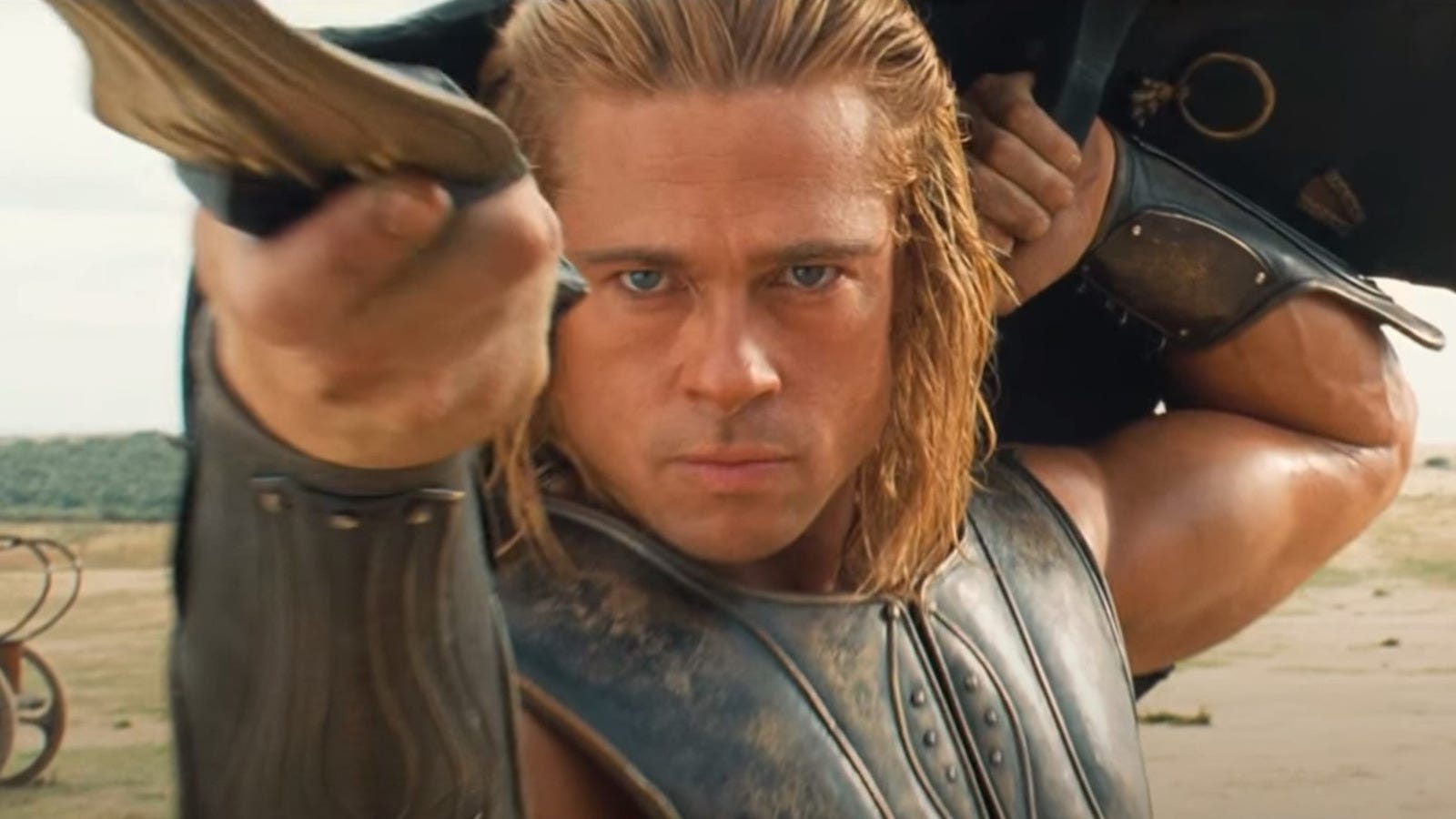
In the wake of Gladiator’s box office triumphs and Oscar glory at the start of the New Millennium, studios across Hollywood rushed to get their own “swords and sandals” historical epics in theaters. It was the 1950s writ anew, as studio heads fast-tracked new films tackling everything from the Crusades to Alexander the Great (the less said about the Alexander one, the better). Only Zack Snyder’s 300, released at the very tail end of the 2000s, seemed to gain a cultural foothold in a similar way to Gladiator, but the new age of Hollywood historical epics quietly segued to superhero films, not to be seen again — until 2026’s The Odyssey.
Christopher Nolan’s hotly anticipated take on one of Homer’s foundational texts isn’t Hollywood’s first attempt at Homer — not even its first attempt this century. In the midst of that aforementioned swords and sandals heyday of the first decade of the 21st century, Warner Bros. put into production a retelling of Homer’s The Iliad, hiring German filmmaker Wolfgang Peterson to develop it.
If you may indulge me a fun bit of history up front here. During production, Peterson pulled out when given the opportunity to reboot the Batman franchise, and Warner Bros. turned to one of its hottest up and coming filmmakers to take over: none other than Nolan. When Peterson ultimately returned to develop his Iliad film after all, Warner Bros. gave Nolan the Batman franchise as a consolation prize. Over twenty years later, I think you can safely determine who got the better end of the deal.
All of Peterson’s hard work resulted in 2004’s Troy: a box office hit, if not a critical one. More than 20 years after its release, Troy has started to receive a cultural reclamation, prompted likely by the tweets of the world’s richest man earlier this year. As the world prepares for The Odyssey, now is the best time to ask the question: does Troy deserve a second look?
The short answer is no…and yes.
Troy moves beyond Homer’s text to retell the entirety of the legend of the Trojan War. For those needing a bit of backstory from their college English course days: the Greek army of Agamemnon of Mycenae and his brother, Menelaus of Sparta, attack the city of Troy after Trojan prince Paris absconds with Helen, wife of Menelaus. Fighting with the Greeks is legendary hero Achilles, while Paris’ brother, Hector, leads the Trojan army.
If that description sounds overly simplified, that’s purposeful — the movie itself, in its rush to retell the Trojan War in under three-hours, overly simplifies the entirety of Homer’s tale, particularly harming its first half. We the audience are never given a good reason why Helen would run off with Paris beyond lust for her Trojan prince and disgust at her Spartan spouse. When this action is the instigator for everything that follows, failing to buy it makes what comes next closer to empty spectacle rather than riveting Greek tragedy.
The further choice to sideline the Greek gods that are deeply important to Homer’s text in favor of a more grounded, agnostic approach takes away much of the text’s mythic power, resulting in an epic that can feel stuck in action movie cliches rather than a deeply moving drama.
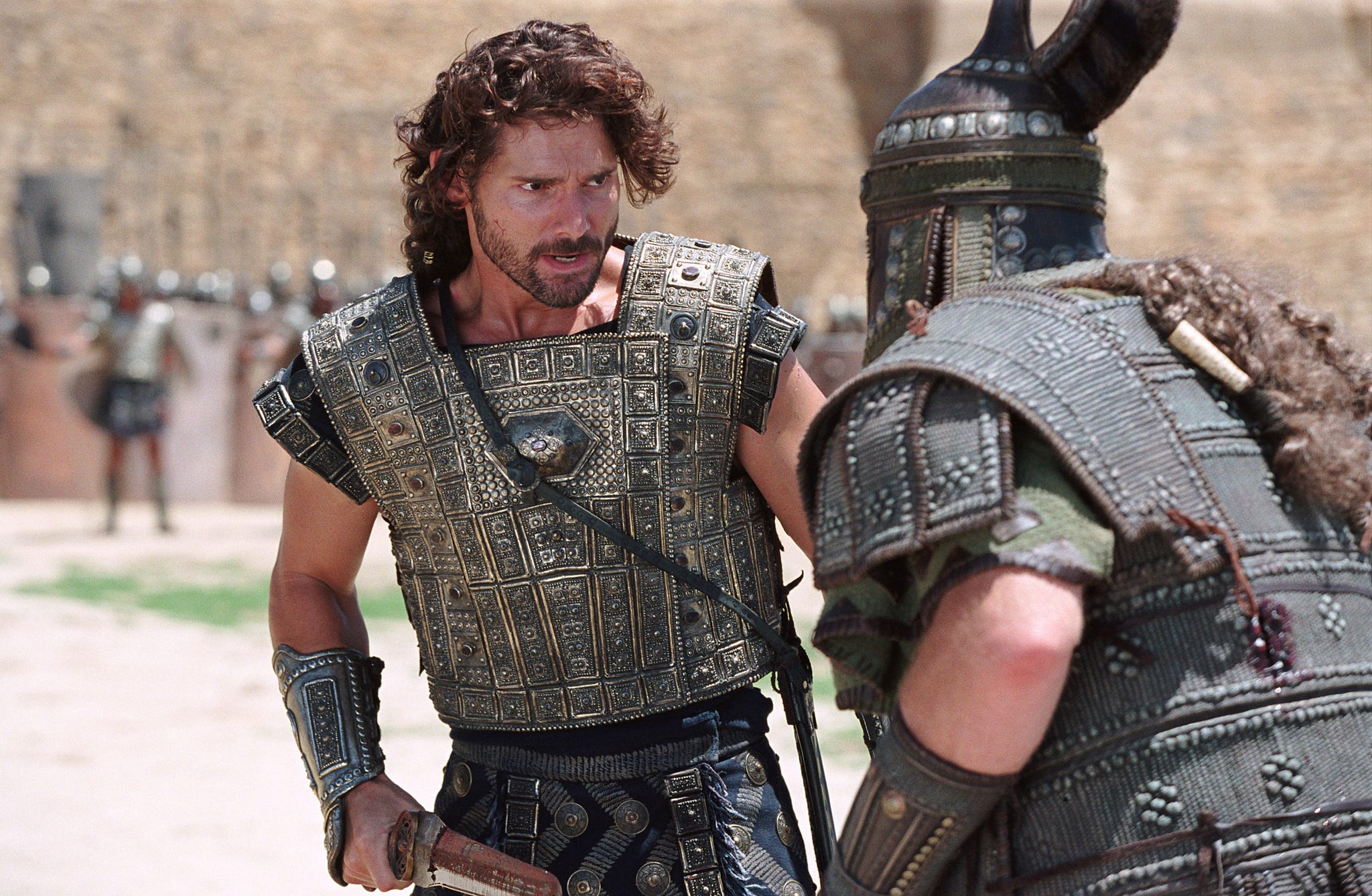
The key portrayals of Achilles and Hector, played by Brad Pitt and Eric Bana respectively, are done broadly right, if again simplified. Achilles, a demigod in Homer’s myth, is a brooding action star here, while Hector receives a more sympathetic take. These choices — laid more at the feet of the screenwriter, David Benioff (one half of the Game of Thrones adaptational duo), and director Peterson — result, again, in a first half that is a struggle to connect with emotionally.
It is truly not until late in the film, during a scene where Peter O’Toole’s King Priam of Troy visits Achilles in his tent, that the film comes alive in a startling way. That scene — easily the best of the movie — is so filled with drama and nuance that you almost forget the lack of emotional connection that came before. If the rest of the movie had this emotional heft and patience, it would be a far different enterprise. But Troy fails to convince us of the central reason why this war must happen. It fails to make us care about the fates of Paris and of Helen. In fact, it seems to despise them, as much as it despises the gods that dominated this ancient world.
And yet. Troy still offers rewards within its lengthy runtime. All $185 million of its budget is on the screen, with the costumes, the sets, and all the movie stars making the film nothing short of a spectacle to behold at all times. The battle scenes at the walls of Troy are arresting — especially the fight between Achilles and Hector that starts the film’s third act. What follows, including the showstopping scene between Achilles and Priam, is the best of the film. The Trojan Horse being pulled into the city and sack of Troy that follows are both filled with compelling visuals — not to mention Sean Bean’s entertaining turn as Odysseus, easily one of the film’s highlights.
As the film finally reaches its conclusion, the entertainment value on display cannot be denied. But what lies underneath that sheen is what ultimately frustrates.
Again and again, Achilles tells other characters in the film that what matters most are the actions we make here and now — not what comes in the next life. That obsession with having your name remembered, with leaving a legacy that will be remembered for thousands of years, is what matters most in this version of that ancient world. Whether that be a familial legacy or a cultural one, the earthly actions of these characters matter far more than what is to come in eternity. That alone is a remarkable contrast to another historical epic’s main theme that had been uttered on posters, in trailers, and on the movie’s cover art just four years prior (love you, Gladiator).
This deliberate choice to rob the original text of the magic and piety that helped define it makes Troy not a mythic epic but instead simply a Hollywood action picture — an admittedly gorgeous one, that being said. Taken on those terms, it is an often entertaining time, at least in its second half. But knowing its source material and the corners it chooses to cut in favor of action over character, Troy fails to live up to the legacy it so clearly is most concerned with.
Hopefully the next attempt at a Homerian epic better fulfills the promises Troy attempted to make over two decades ago.

A well-considered article, thanks!
Thanks for a wonderfully written piece that seems more edifying than the film being reviewed. Skipped the picture the first time, will do so again.