



“Knowing when and where to use it, that’s the whole ball game” is a fitting thesis for the new DCU/HBO Lanterns show.
It is a refreshingly earnest, comic book western detective story with what cosmic elements of wider DC lore can fit into its hyperfocused narrative. While still essentially a “walk to new location and talk” show, Lanterns delivers a story that feels bigger than any spectacle that appears on screen. In an IP historically cursed with middling to offensive low budget TV series, Lanterns is a huge win for both HBO and their interest in James Gunn’s burgeoning DC cinematic universe.
Like most adaptations these days, the first few trailers for Lanterns were met with extreme pessimism. This pessimism colored the first viewing even for myself, who was not very familiar with the Green Lantern mythology prior to picking up the show. Whatever low expectations myself and the public had were quickly washed away by the end of the first episode. Lanterns is an engaging, well thought out narrative that focuses almost entirely on a theme of responsibility. Now, superhero media as a whole is very focused on responsibility and great power.
Lanterns differentiates itself by really meditating on the aspect of authority that comes with the power of a superhero. And to my delight, their criticism of authority is not at all cliche or derivative. The show presents several characters who are used to wielding power and through them shows the audience that true authority requires compassion, charity, and intimate knowledge of those in your charge. The modern tendency to conflate power with authority is precisely what makes the show’s treatment of the subject so interesting. Authority is not merely the ability to command; it requires knowing and loving the people entrusted to you. In a culture that increasingly refuses to recognize any authority higher than the individual, Lanterns‘ insistence that power must be ordered toward the good of others feels surprisingly countercultural. It would be easy to hand-wave some of the show’s critiques of authority as generic anti-authoritarian slop, but I found the criticisms in Lanterns to be remarkably specific without becoming preachy or sanctimonious.
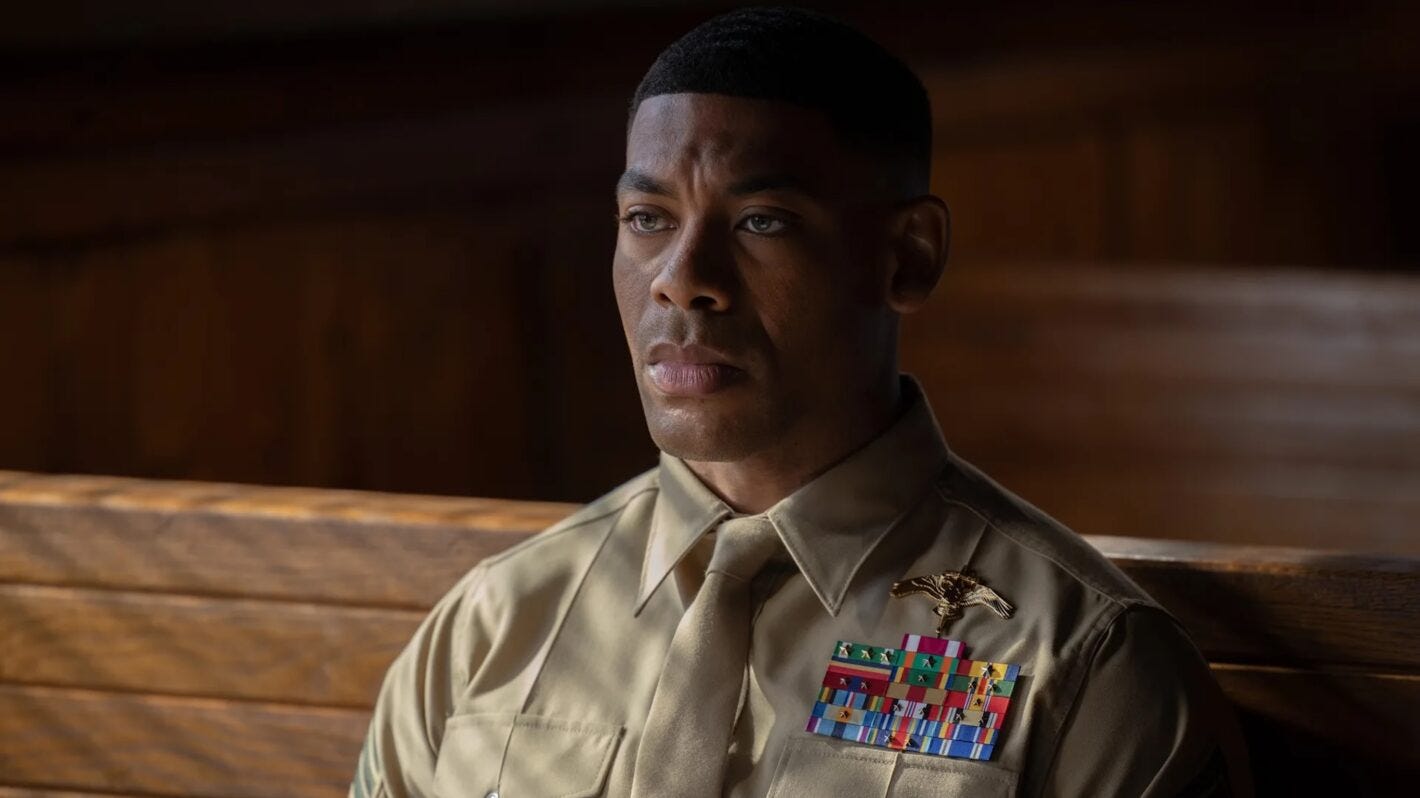
I did not know much about Green Lantern comic mythology prior to watching this show, and went into it as an outsider fully prepared to point and laugh. There are some contrivances and plot conveniences that keep Lanterns from reaching over the 8/10 mark, but the end product is coherent enough that they rarely become distracting. What few holes I could poke are more than made up for in the character writing and main cast of actors. This show will disappoint many by essentially being a ‘walk to new location and talk’ show, and it would not work as well as it does without all star performances from Kyle Chandler and Aaron Pierre. Kelly Macdonald is extremely well suited here as well, and I found myself pleasantly surprised by Jason Ritter. With one exception, the episodes are paced extremely well, and what little spectacle there is gets used effectively. Lanterns is clearly trying to establish a Green Lantern mythology for the DCU untainted by the Ryan Reynolds foray into the character. This is a bad thing insofar as it means the show is almost too afraid to embrace the wacky side of the mythology, but ultimately its restraint is justified by a very satisfying ending.
Lanterns succeeds in that it understands that great characters are at the heart of every comic book, and the mythology will flesh out around those characters. I do hope future Green Lantern shows will have more green and lanterns, but for a reintroduction, Lanterns makes a solid first impression.
'Rebel Ridge' Review

If you asked me who the greatest action director was of all time, I’d have to definitely shout out both John McTiernan (Predator, Die Hard) and Tony Scott (Crimson Tide, Unstoppable): both elevated typical genre fare into memorable classics that usually centered around a single protagonist facing almost impossible odds. In his first film in years (inter…
