


(Spoilers for both the movie and the novel. TL;DR: stay home and read the book)
Klara and the Sun is a futuristic (dystopian?) film based on the 2021 novel of the same name by Kazuo Ishiguro and directed by Taika Waititi. It follows Klara, an Artificial Friend, as she accompanies her teenage owner, Josie, and navigates relationships with those around her. It’s a topic which is extremely relevant to a new generation growing up with AI, and Ishiguro was ahead of his time in thinking about the subject back in 2021 - ChatGPT would not launch until the following year. Ishiguro is one of the few truly great novelists still working today, perhaps most recognizable for works such as The Remains of the Day (1989) and Never Let Me Go (2005), both of which have received their own film adaptations, and consequently I was both excited and apprehensive about yet another of his novels receiving a movie treatment. To cut to the chase, I need not have been either. The film is neither great nor terrible, managing to ‘play it safe’ while also missing the most prescient elements of Ishiguro’s truly insightful observations.
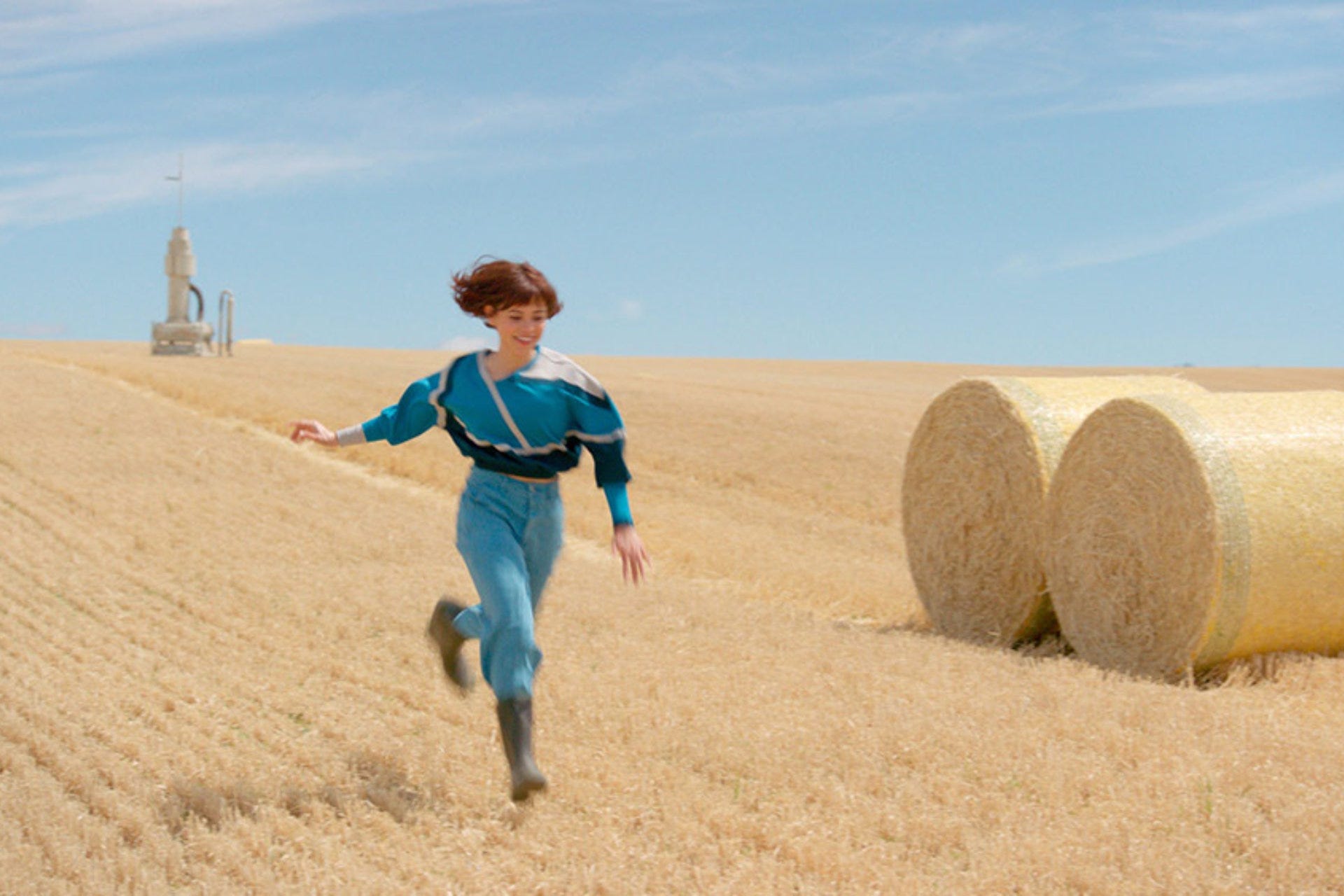
To start out with the positive elements, this film is visually pleasant, even beautiful at times. The novel, told as a first-person narration by Klara herself, is at times extremely sparse in its physical descriptions – including of the AIs themselves – and thus the filmmakers have to create the visual world of the film almost from scratch. Despite, or perhaps because of, this blank canvas, the visuals are pleasing or even compelling -- with a couple exceptions -- and the occasional first person shots from Klara’s perspective manage to capture the very odd way in which Klara reports seeing things in “boxes” or “shapes” in the novel. If I had to list other positive aspects of the film, I would say that Jenna Ortega and Amy Adams were each compelling in their respective roles as innocent android and prickly Karen, and Michael Giacchino delivered as usual with a score that was both pleasant and even memorable.
On the other hand, the movie has definite flaws, even from a cinematic perspective. The dialogue is uneven and at times stilted, and worst of all, the film suffers from an effort to make itself interesting. The novel is not the most exciting or action-packed story, and the movie, being a visual medium, has an obligation to its audience to show rather than tell. Unfortunately, the director decided to solve this problem by making things “happen” at regular intervals in an entertaining or exciting manner.. Thus, predictably every fifteen or twenty minutes the story would be interrupted by some loud incident or jump-scare – Klara would knock something over, or a machine would make a sudden, loud appearance, or a car would crash. These things fit into the story, but once one realizes the pattern, they become distracting and annoying. To be sure, it can be difficult to adapt any novel comprised mainly of talking, let alone inner dialogue, without boring the audience, and yet the novel has plenty of visually striking images and set pieces which could have satisfied an audience without needing to wake them up every quarter of an hour – and based on the completely empty showing I attended, the filmmakers needn’t have worried about keeping a more general audience entertained and should have focused instead on creating a more insightful film, regardless of how slow-moving the results might have been.
The biggest problem by far with the film, however, concerns the way in which the central message of the novel is turned on its head. (Here, by the way, come the real spoilers, so if you plan on reading or watching, be warned.) To be sure, there were numerous changes which I thought impoverished the story, and occasionally didn’t even make sense. For example, the relationship between Josie and her mother is so fractious in the movie that the mother is outright opposed to getting an AF, which makes little sense, since it turns out that she had been planning for some time to replace Josie with a droid. A broader complaint I have is that the movie makes blindingly explicit themes and assumptions that are implicit in the novel. For example, the novel tells us that some children are genetically “lifted,” but never explains what this means or what difference it makes for these children - indeed as far as the events of the story are concerned there seems to be no difference; even Josie’s sickness is not explicitly linked to her genetic alteration. The film however, chooses to turn this plot element into a matter of wealth inequality, a theme implicitly present in the novel, but not developed, leading to a truly ridiculous scene, a marxist cartoon almost, involving a bunch of grotesquely hapsburgian horrors dressed like they were attending the met gala – the one true visual failure of the film. Again, these changes may simply boil down to the difference between the two mediums, but even so it was frustrating to watch the delicately woven suggestions of the novel bludgeoned to death by heavy-handed story-telling.
The most problematic change, however, lies in the character of Klara herself.
One of the central questions of the book is, what is a person? Does it rely on consciousness? Could AI be conscious? While the novel challenges the reader on these points, one also learns as the novel goes on that Klara herself, while very intelligent and far more understanding than most other AFs, nonetheless looks at the world differently than a human. The movie Klara, on the other hand, is far more like a newborn, innocent child who understands little of the world, but is essentially human in her emotions and reactions. This difference between human and AF nature becomes most apparent when Klara discovers that Josie’s mother is planning on replacing her, and that Klara herself will provide the brains and consciousness of the new Josie. Klara will essentially be used as an AI therapy tool, or even as a part of an extended roleplay -- the parallel to contemporary AI uses need not be stated.. Book Klara accepts this task with frighteningly little compunction, seeing it as her duty to perpetuate Josie after her death, where movie Klara more understandably (from a human perspective) refuses.
To take another example, Klara, who has implicit faith that the sun will heal Josie, believes that she must destroy a smog-producing machine in order to please the sun. Book Klara, while refusing to divulge her reasoning, manages to convince Josie’s estranged father (a character missing in the film) to help her in her vandalism on the grounds that it will help Josie, despite providing no evidence for this wild claim. Movie Klara, on the other hand, has no human help, and is repeatedly told that she is wrong in her fantasies about the sun. In the first of these examples, we see that Ishiguro is aware, in a way his character Klara is not, of the dangers of an AI system which lacks a moral compass and exists merely to please its human companion. In the second, we see the opposing danger: that AI could, because of its supposed advanced understanding, convince its human companion to do something completely irrational. It’s a stark warning from a book which is largely sympathetic to its AI protagonist, and five years later, we can see all too clearly both dangers being realized in some form or other in our own world. The film, however, misses these opportunities to present both the light and dark sides of AI, and chooses instead to tell a bland story focused on the (platonic) love story of a droid and her human. It’s a missed opportunity to say something really relevant about the new technological environment in which we live and in which our children will grow up.
As I said at the beginning, my advice to you is to stay home and read the book.
Asking the Big Questions through Science Fiction (Series #8)

Science fiction is a modern term with origins in antiquity. From the dawn of time, mankind has sought to understand his place in the universe. Looking to the heavens, the ancients charted the stars, grasping at a sense of the infinite from the finite confines of their earthly realm. Cultures across the globe developed their own cosmologies to help answe…
