


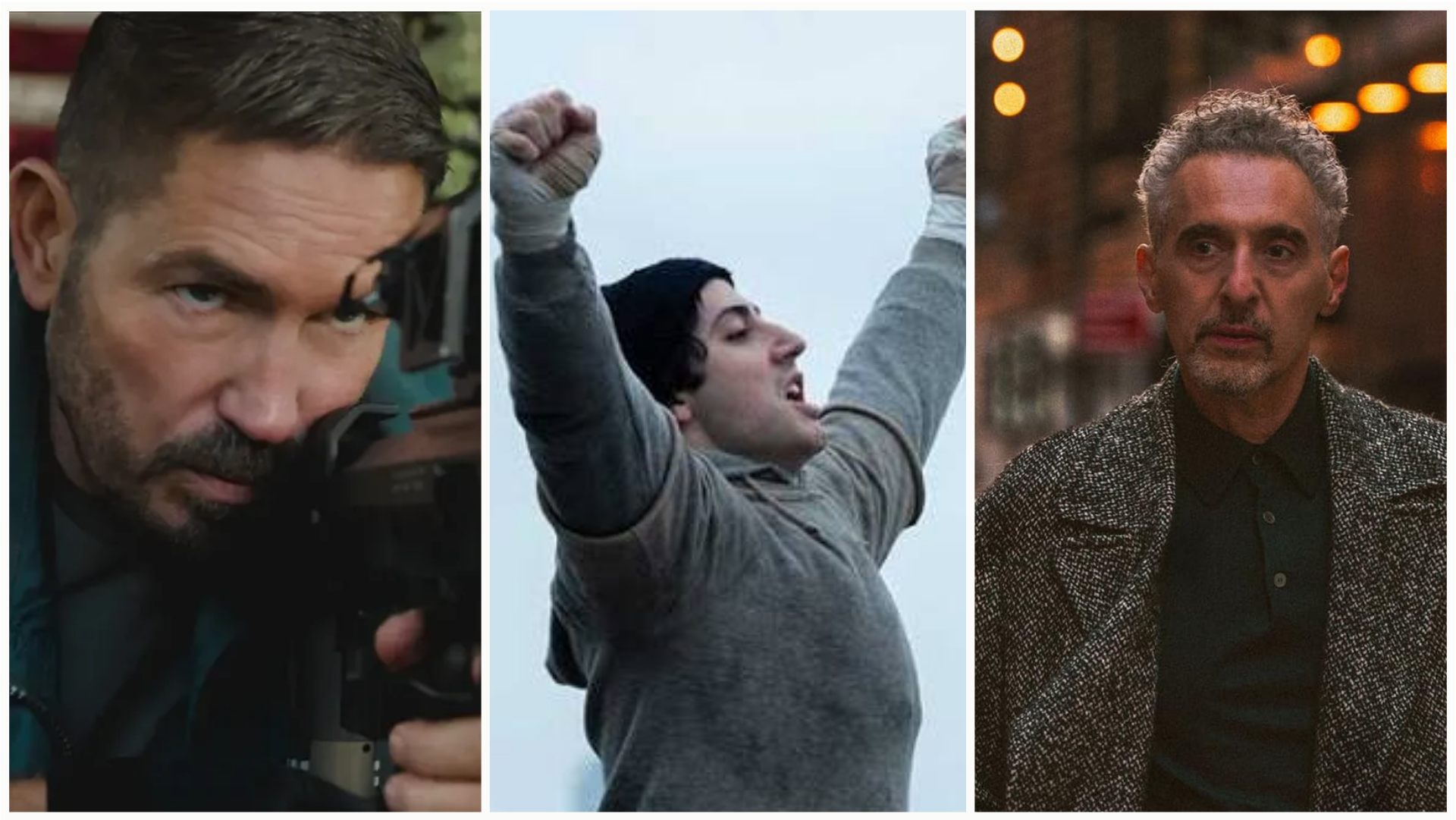
Ghost Soldier | Fun Red-State B-Movie Schlock
By Joe Wilson
Sometimes you’re not in the mood for great cinema. Sometimes you’re in the mood for a cheesy, fun, action-packed B-movie. And Ghost Solider delivers exactly that. It’s fun, stylish, takes itself seriously but not too seriously, and delivers a good time at the movies.
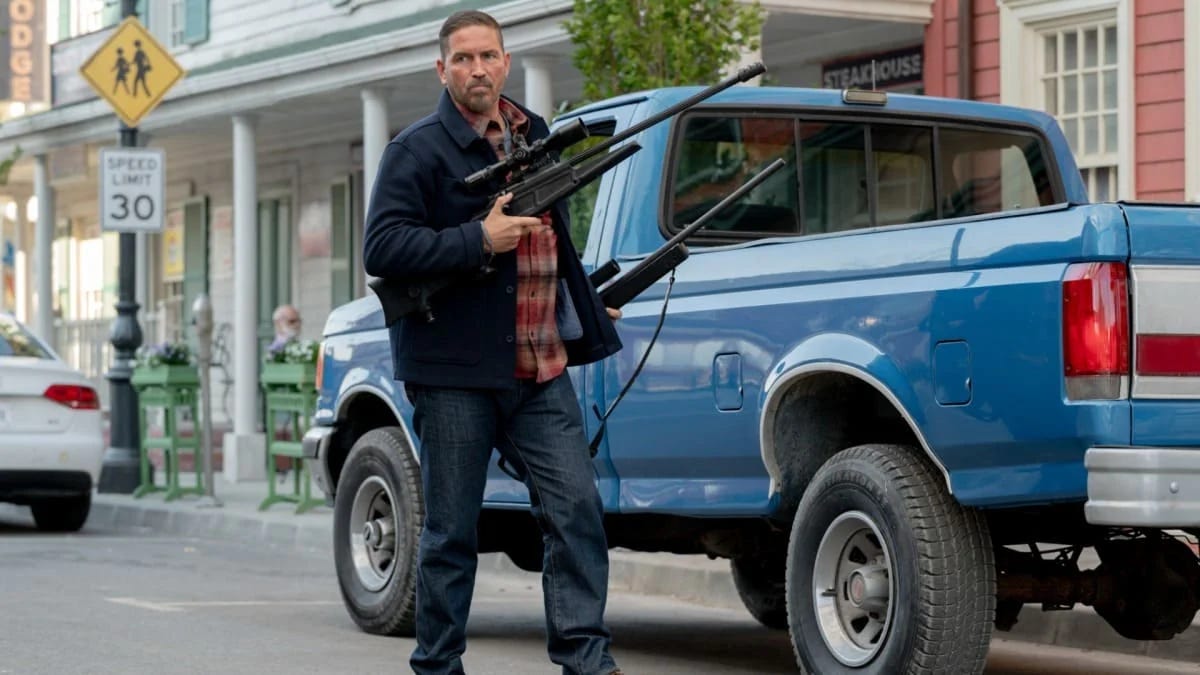
The story follows Henry “Fitz” Fitzgerald (Jim Caviezel), a retired special ops soldier living in isolation near his old hometown in Wyoming. He spends his days tinkering on advanced weapons tech in his basement because he is, of course, a genius inventor as well as an incredible soldier. All he wants is a peaceful life, but unfortunately a shadowy corporation, Brownstone, needs his land to bring online some kind of water pump to provide water for AI data centers owned by some Middle Eastern sheik. The details of the plot are somewhat fuzzy, as all good conspiracies are, but the plot is really just background noise to allow Fitz to kill many, many bad guys in a small Wyoming town. He kills them with guns; he kills them with bombs; he kills them with rockets, missiles, bow and arrow, high-tech magnet gadgets, and his own bare hands. The movie clearly envisions Fitz as John Wick1 plus the Equalizer with Batman technology, trying to pour every action hero competence cliche into this one man. And you know what? I like all the movies Ghost Soldier is trying to be, and it does a pretty good job of mixing them together, if not in a believable way then at least in a fun one.
Of further interest to Catholics is the inclusion in several scenes of Fitz’s devotion to St. Michael. He wears a St. Michael medal, his military codename is “Archangel”, and in one particularly tense stealth situation he calms down a child by praying the St. Michael prayer, asking for protection. It’s a moment of pandering in a movie which is chock-full of pandering to red-state Christian conservative sensibilities, but it is respectful and cool to see on a theater screen. Jim Caviezel’s deep Catholic faith is well-known, and so this prayer felt more like a quiet, personal moment in a film full of loud, cheesy fun, and I appreciated it. I generally dislike moments in “Christian” or “conservative” films when the whole movie stops to preach a quick sermon, and I felt the St. Michael devotion was incorporated more organically in this one, though perhaps a bit clunkier than it could have been. Writing is definitely not Ghost Soldier’s strong suit, as the third act feels in many ways very disjointed from the first two, and the St. Michael devotion vanishes completely in that last act, but this could have been incorporated a lot worse.
Overall, I recommend Ghost Soldier to action fans, not for the plot or the writing or deep emotional characterization, but for 90 minutes of action fun with cool set pieces, a ludicrously competent hero, and an overall commitment to the fun of b-movie action. It feels more like a Tom Clancy video game than a Tom Clancy novel, but those games are fun and enormously popular and I think this movie will absolutely hit right with the right audience. Catch it in theaters before it vanishes, or else I’m sure it’ll hit TubiTV very soon.
'Sound of Freedom' (2023) Review @ The American Postliberal

I don’t know if you’ve heard, but this little film called Sound of Freedom has been making a big splash this week in conservative and Catholic circles! It has been completed for five years but only just now is getting a release due to several studios not wanting to touch its controversial subject matter: child sex trafficking.
I Play Rocky | An Effectively Conventional Biopic of Unconventional Film History
By Dean Robbins
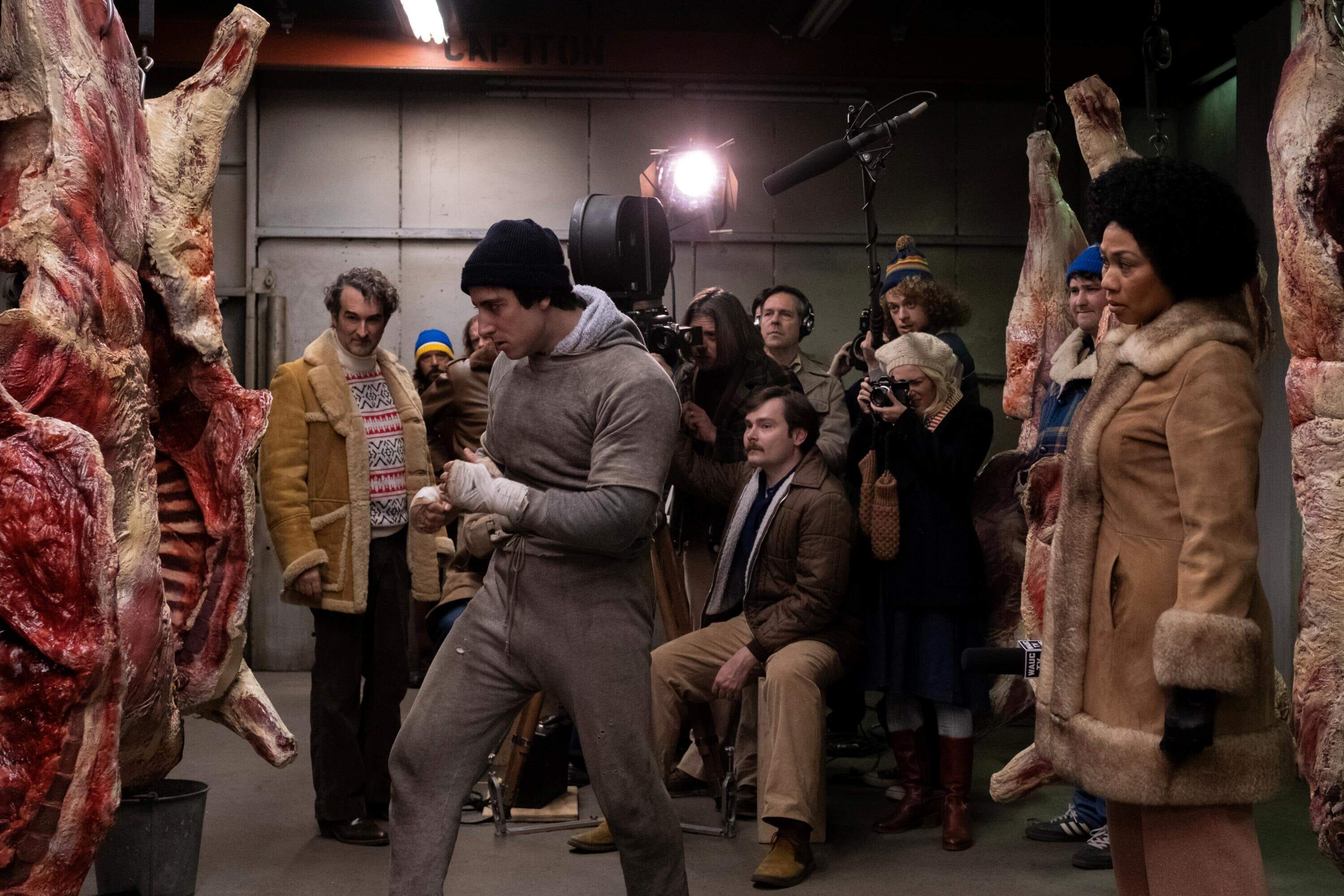
How far should one go in the realization of their creative vision? Rocky (1976) won three Academy Awards from ten nominations, but it was almost never made. Green Book director Peter Farrelly captures in I Play Rocky the difficult journey the film took and captures the various dynamic forces that are needed for a vision to be refined and perfected.
Mike “Sylvester” Stallone (Anthony Ippolito) is a down on his luck actor who goes from low-wage job to low-wage job while getting rejected from roles. After a meeting with film producers Robert Chartoff (Toby Kebbell) and Irvin Winkler (P.J. Byrne), Stallone finds industry interest in his screenwriting ability, but not in his true passion of acting. The producers want to make his movie, but with a bigger star. Stallone insists instead “I play Rocky”.
Like the Best Picture-winning boxing drama, this film is a tale of underdog courage and triumph. It is also a great encapsulation of the risks inherent in true creativity and the processes that contribute to bearing it out. Stallone’s vision is the driving force of Rocky, but it alone did not make the film a classic. The roles of producers Chartoff and Winkler as well as director John G. Avildsen (Jay Duplass) are critical, too. At one point, the latter says that the film is good, but not great. The separation between the two is a special moment where a work of art transcends itself into something greater through the total investment of an actor or creative. It is through the guiding hand of Avildsen that Stallone can realize that moment.
The infusing of personal experience and the fiction of art is precisely the animating force of the great humanity exhibited in creativity. Pope Leo XIV states in his speech last month to a meeting of artists and curators that “algorithms lack the spark of the human, whereas ‘authentic culture and art preserve this spark’” [quote from Magnifica Humanitas]. Technology and raw technical talent cannot make a work of art truly lived-in. It is the interpenetration of the meanings incarnated in our finite, lived experience into the work that is the spark of great art. Rocky was so earth shattering in 1976 because it breathed new life into the medium and the sports drama genre. Pope Leo XIV again says in the same speech that “the logic of algorithms tends to repeat what ‘works’, but art opens up what is possible”. This is the lesson that Rocky taught Hollywood.
Ippolito does an incredible job of realizing Stallone and, at several points, almost completely disappears into the role. The rest of the cast is solid, too. Kebbell, Byrne, and especially Duplass provide both pathos and levity to their characters. Stephan James brings Carl Weathers to life. The strongest performance, though, besides Stallone, is Tracy Letts’ abrasive studio executive Sandy Maddox. Letts both engenders the biggest laughs and infuses the character with a real humanity that a lesser actor would make into a caricature instead.
AnnaSophia Robb and Matt Dillon as Stallone’s first wife Sasha and father may be the weakest links. I Play Rocky does not get close to its full power until the second act and Robb in the first act is part of the reason why. I did not buy her performance at first. Dillon is also fine as Stallone Sr., but his character is surprisingly underdeveloped for how important his dynamic with Sly is to the film. Finally, Kiki Seto and Robert Morgan are perfectly cast as Talia Shire and Burgess Meredith, but neither gets substantial screentime.
My complementary critique of I Play Rocky is how much I wish it was longer than 128 minutes. Writer Peter Gamble, who has only had one other feature writing credit and not a well-known one, does wisely focus on Stallone’s persistence and the collaborative creative process of actually making the film but a lot goes missing, too. Talia Shire and Burgess Meredith are, again, barely in the film, and significant elements of the process like post-production are completely omitted. There was probably not an interesting story behind those elements, but their absence is felt. Paulie (Scot Teller), one of Rocky’s most important characters, is only seen in the background briefly.
Gamble carefully engineers the audience’s memory and perception of Rocky to enhance I Play Rocky. And a brief, thematic spoiler here, the ending of Rocky is almost retconned, at least psychologically, into being an absolute victory. The film may have been stronger (but less crowd-pleasing) if it leaned into the ultimate bittersweetness of Rocky. Especially at the very end, I Play Rocky is a little overeager to resolve itself, most clearly in its treatment of Sylvester’s relationship with his father.
There is little unpredictable about I Play Rocky, a slight irony considering how much it applauds the creative risks of Rocky. But at the same time, the key elements work. You will probably guess exactly how the emotional beats play out even as they move you. While this conventionality both in story and technical execution may keep the film from being truly exceptional, it is still absolutely worth watching. I Play Rocky is the kind of crowdpleasing awards season fare that has often released around Thanksgiving that has largely disappeared from cinemas. Think Hidden Figures (2016), A Theory of Everything (2014) or this year’s Project Hail Mary. The whole family from teens to grandparents will probably enjoy I Play Rocky.
As for material Catholics may have an issue with, the film does include Stallone’s brief foray into pornography and depicts this as part of the destitution he faced before stardom. While there is a bit of sexual humor in showing this, it is not very explicit and I do think it is a worthwhile element of the real story to include. There is generally an occasionally raunchy sense of humor, hence the film being best for teenagers and adults. This is from one of the directors of Dumb and Dumber after all.
I Play Rocky is not perfect or even especially original, but it is a sturdy, affecting dramatization that is sure to be an awards contender. Ippolito deserves a Best Actor nomination.
100 Movies Every Catholic Should See #80: Rocky (1976)

There is something special I’ve often found genuine in low-budget filmmaking: the roughness, the imperfections you only get from only being able to get one or two takes with the equipment available. But technicalities aside, one thing that has made them a personal favorite are the types of stories often associated with such limitations. Knowing all of…
The Only Living Pickpocket in New York | A Love Letter to NYC
By Samuel Morales
Noah Segan, the director of The Only Living Pickpocket in New York, has made his entire career by appearing in Rian Johnson films.2 He has more proper supporting roles in Brick, The Brothers Bloom, Looper, and Knives Out and then cameos in The Last Jedi (he’s an X-Wing pilot that blows up) and the last two Knives Out films
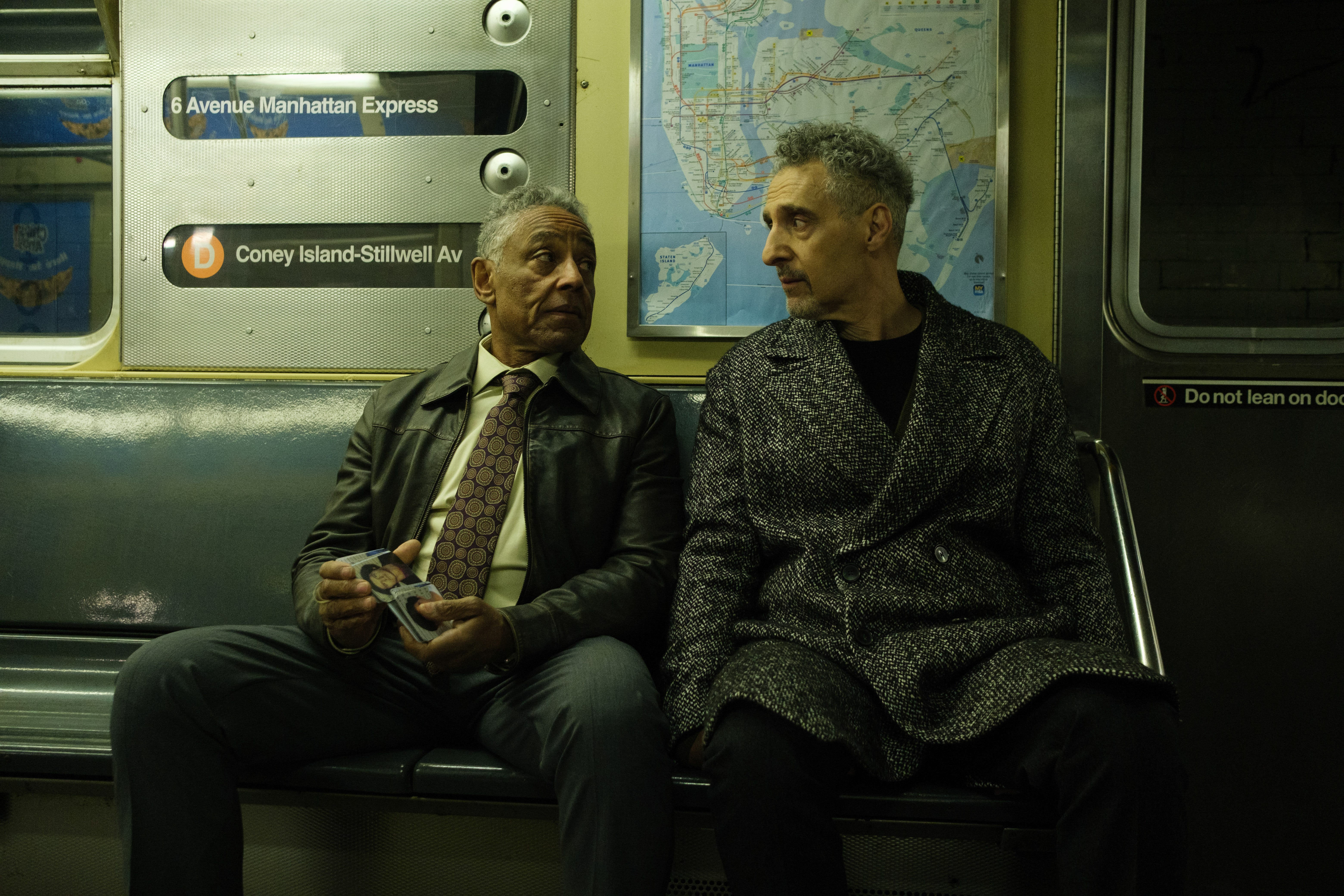
Now that he’s gotten into directing (with Johnson’s help producing) he’s assembled an impressive cadre of actors for his NYC-set drama about an aging pickpocket: John Turturro stars, supported by Steve Buscemi, Giancarlo Esposito, and another A-list appearance that I won’t spoil. The film follows Turturro’s Harry Lehman as he watches the New York he grew up with fade around his very eyes, as he struggles to make ends meet to support his catatonic wife, Rosie (Karina Arroyave). After he pickpockets a member of the wrong crime family, Lehman must rush from borough to borough to try and fix his mistake, leading him down a road of self-reflection and confrontation with regrets of the past.
Turturro gives a phenomenal performance and I see why he’s getting a lot of Oscar buzz: one scene in particular later in the film where he reunites with his estranged daughter (Tatiana Maslany, also excellent) is some of the best acting he’s ever done. But genuinely the real star of this movie is New York City: this was actually shot in the real city and the locations, framed by frequent Greta Gerwig collaborator Sam Levy, all look magnificent.
There’s also a recurring theme in the film about digital vs analog: the antagonist, a spoiled rich kid named Dylan (Will Price) who happens to belong to a powerful crime family, goes on and on about all of his NFTs, smart watches, and cryptocurrency, whereas Harry goes out of his way to use a payphone, listens to vinyl, and asks people on the street for directions. His whole analog world is crumbling around him and yet watching the movie I genuinely found myself wanting to live like that, without a smartphone (I recently deleted Spotify from my phone and started collecting CDs to listen to in the car and it’s actually been so much fun).
All in all it’s really impressive that this is only Segan’s third film, although I will add that the dialogue (having seen almost every Johnson film myself) absolutely sounds like Rian Johnson took a pass on the script, although I’m sure the story itself is Segan’s. I don’t blame him, Johnson writes great dialogue and it only boosts the film.
It’s also a bummer that this didn’t get a wider theatrical release, and it’s in even less now than it was a few weeks ago, but if you have a chance to see it near you take it before it’s gone!

He even has a back tattoo with a Latin motto!
Joseph Gordon-Levitt is the only other actor to appear in every Rian Johnson film, although his last four appearances were voice cameos
Sunrise on the Reaping’s also out this week and I’m really excited to watch it on opening night! Hunger Games is the definitive dystopian YA franchise for a good reason, and I always found Haymitch’s backstory and sacrifice fascinating — very interested in seeing how the prequel novel translates to the big screen, there’s a lot of cool stuff going on that Songbirds & Snakes, the past prequel, didn’t have.