


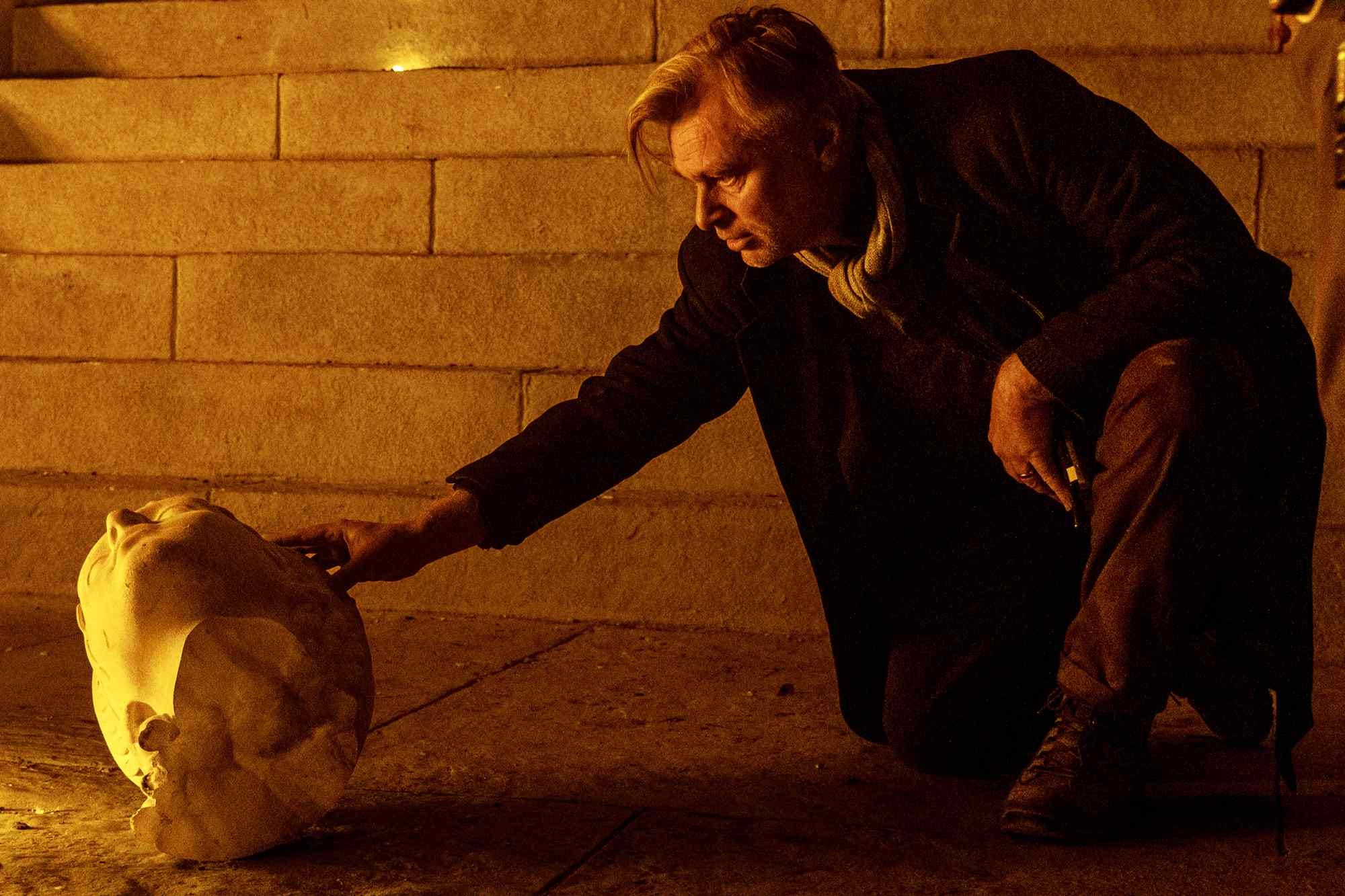
“Before filling the glass with good liquid, the bad one must be poured out.” - St. Augustine
I don’t need to tell you the story of St. Augustine — no, not you, readers. You know already of the great saint, whose conversion story is perhaps the most famed ever written. His life gave birth to the concept of the Augustinian journey — the story of a man who sins, who rejects the call to conversion for years, but who ultimately makes atonement and returns home to his true self. This Christianized version of Joseph Campbell’s Hero’s Journey has been applied to characters across history, literature, and film — including, surprisingly, Christopher Nolan’s blockbuster, critical smash, The Odyssey.
It’s key to note here — and this is where the “surprisingly” comes in — that I’m referencing Nolan’s Odyssey here, not Homer’s. Yes, it’s an adaptation, and quite a faithful one at that, both in its structure and in its presentation of the main hallmarks of the 3000-year-old story. But Nolan brings a decidedly Augustinian lens to his interpretation — dare I say, translation — of the story, especially in how he sees the character of Odysseus. Purists will argue with me, I’m sure, that such an interpretation does not reflect the Homeric concept of virtue in the book and would be foreign to that age. That this Odysseus, furthermore, has more in common with other Nolan protagonists than with the Odysseus of the text. To which I say: yes, fine. But, just as translators of the work across the centuries have brought their own societal ideas, prejudices, and biases to their translations, Nolan does as well here, offering what is his most Christian work yet as a result.
Was this purposeful? Perhaps not. But Nolan was born and raised Catholic. The Baptismal mark remains and has colored his work in the past (especially in his Dark Knight trilogy). To find it here, in an adaptation of one of the key foundational texts of Western Civilization, makes it a rich, deeply rewarding film — one with five moments I especially want to highlight.
100 Movies Every Catholic Should See #26: The Dark Knight (2008)

What more can be written about The Dark Knight?
Spoilers, of course, follow. Yes, the book is 3,000 years old. I get it. But Nolan adds in key differences that are worth saving for your own viewing.
I. “The Power of a Sacrifice is in the Cost of the Person Making It”
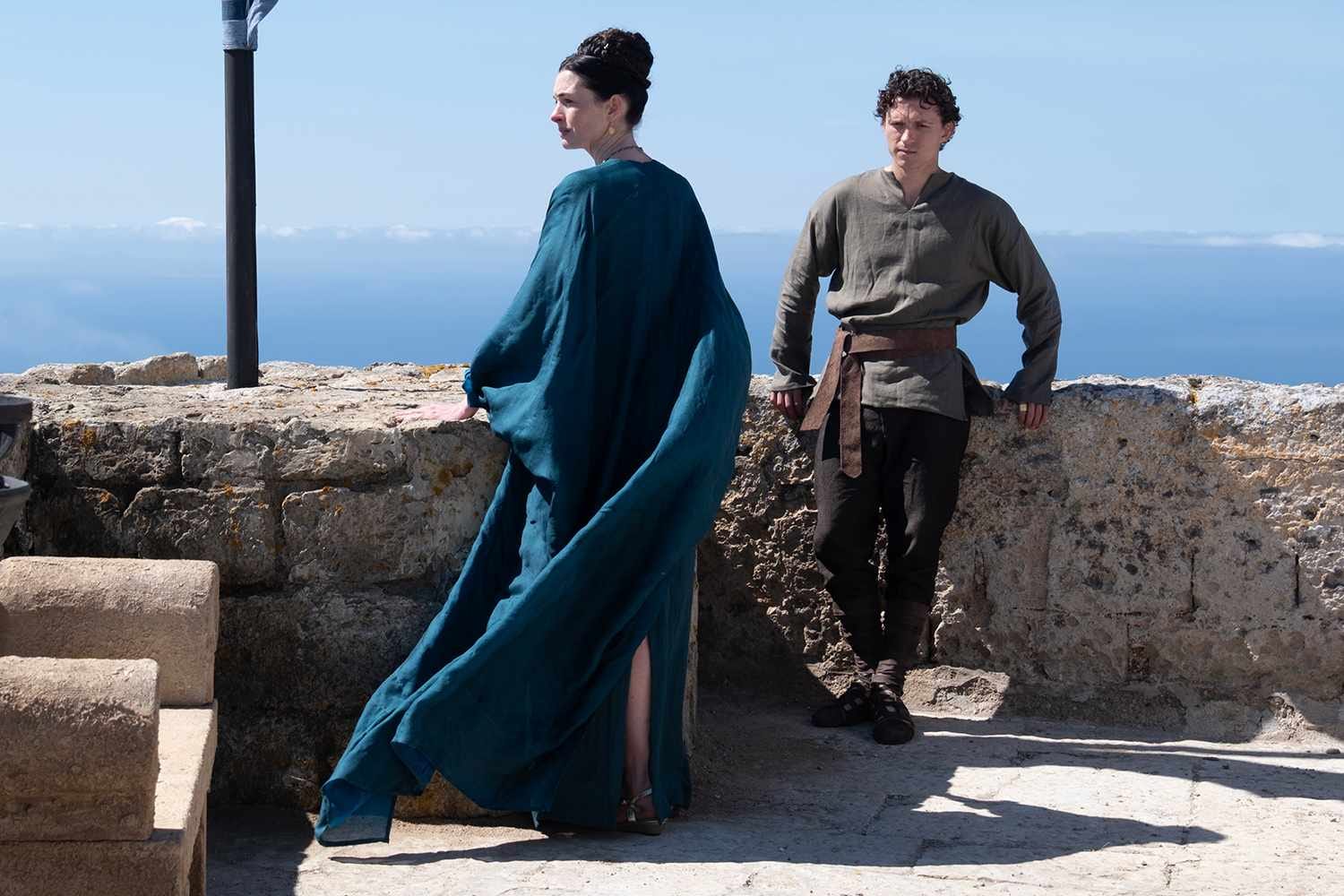
Early in the film, Nolan has Penelope (Anne Hathaway) recount to Telemachus (Tom Holland) stories of the father he never knew, including of the final night before he left his beloved Ithaca for Troy. That night, Odysseus (Matt Damon) told Penelope why he had to go off to war — despite his misgivings with it. He warns Penelope that King Agamemnon (Benny Safdie) sacrificed his own daughter for favorable winds and would not hesitate to do the same with their own son, Telemachus, if Odysseus refused to aid him.
Penelope, justifiably horrified, calls this monstrous. Odysseus replies, “the power of a sacrifice is in the cost of the person making it.”
Here, Nolan immediately lays out a contrast between Agamemnon and Odysseus, showing Odysseus willing to sacrifice himself for his son, his family, his Ithaca, if it means protecting all of them. For him, “of course love is a sacrifice.” He willingly accepts that he may never return, if it means protecting what he holds most dear. The power is in the cost, indeed.
The Christian concept here is evident — “no greater love than this” — but it’s also a fascinating starting point for a character who will later need to find his way back to this version of himself again.
II. “Zeus’ Law”
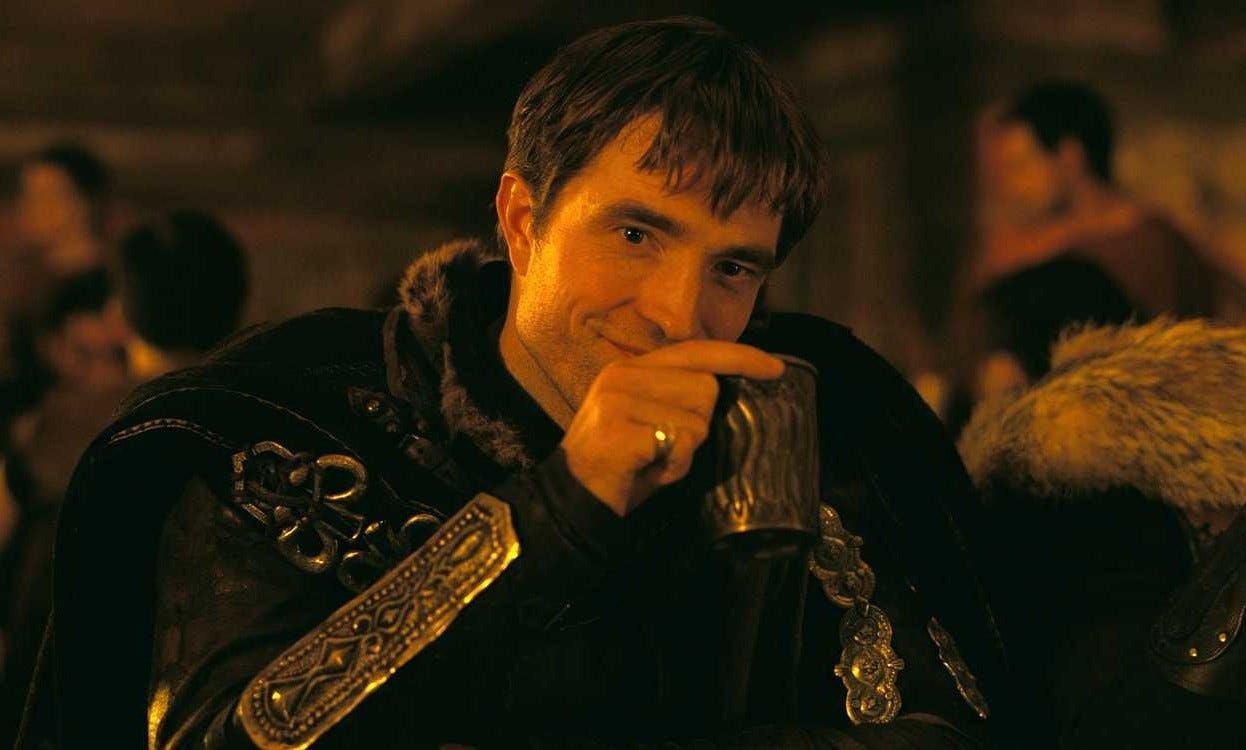
Now, this is less a single moment than a key theme running throughout Nolan’s version of The Odyssey. Over the course of the film, characters encourage each other to treat strangers like they’re a god in disguise. Telemachus tells characters on more than one occasion that they have “wise eyes, Athena’s eyes.” Odysseus, upon reaching the cave of the fearsome Cyclops, says that his crew has nothing to fear because of “Zeus’ Law” (spoiler: Odysseus was wrong).
We see, in this Greek world, a people who believed that the divine touched and influenced everything in their lives. The existence of the divine was simply a given, seen in the waves, in the wind, in the storm. This extended all the way down to the way people were meant to treat each other — thus, Zeus’ Law. Nolan’s concept of it is based on the Greek concept of xenia, one of the most important themes of Homer’s poem. He interprets xenia, however, through what can only be described as a distinctly Christian lens, seeing it more as “treat each person like they’re made in the image and likeness of God.”
Telemachus insists that every stranger be given a place at the table in his father’s house for that reason. Penelope insists, near the end of the film, that Odysseus — in the guise of a beggar — have his feet washed for this same reason as well.
With this theme, Nolan is commenting on something that has been lost in our modern times that must be regained again. Strangers deserve love. They deserve respect. They deserve hospitality. To do otherwise is to violate Zeus’ Law — to violate all that is meant to be sacred between men.
Breaking this law is the great sin that plunges Odysseus into the horrors that follow — but more on that later.
III. “Accept Your Punishment”
After Odysseus and his crew leave Troy, they encounter horror after horror at each stop they make. They hope for hospitality, for Zeus’ Law, but are instead given pain and death from giants, witches, and, yes, gods themselves. All due to their sins at Troy and after.
At one point, after the witch Circe (Samantha Morton) horrifically turn Odysseus’ crew into pigs, she warns him that “your men don’t want you to defy the gods. But the gods say only you make it home.”
Odysseus replies without hesitation, “then I defy the gods.”
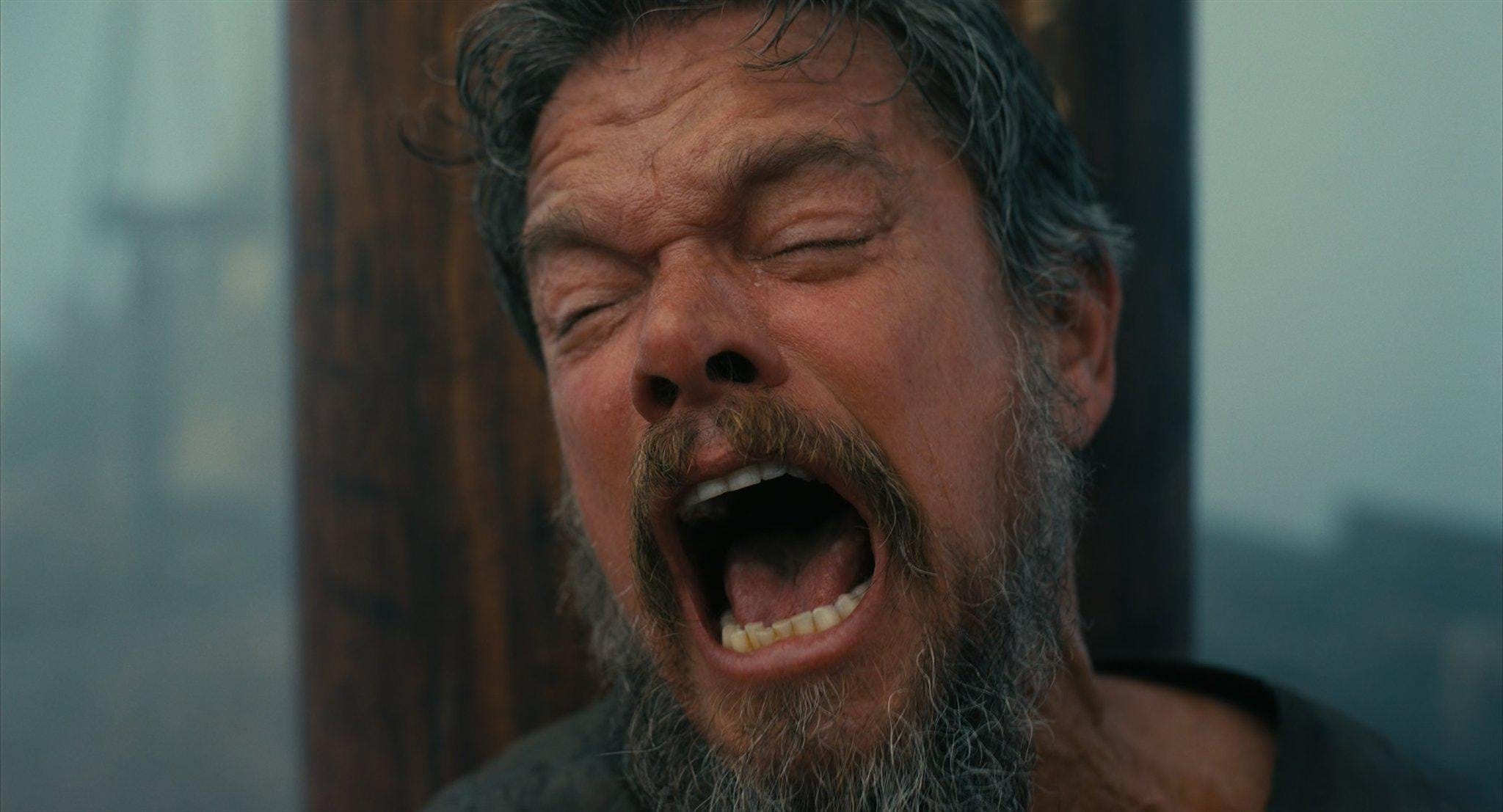
He, once again, refuses to accept his fate and stubbornly fights back against the divine. For this, his crew is lost, and he is left alone on the island of the sea nymph, Calypso (Charlize Theron). He spends the next seven years there, eating lotus flowers, all to forget the pain and suffering he has both endured and wrought by his own hand. He is a man who knows what he has done but is unable to atone.
“Make me pure, Lord…but not yet.” So said Augustine. And so also says Odysseus.
Before reaching Calypso’s island, Odysseus heard the song of the Sirens — one of the most stunning sequences of the film — and only then admits what had been haunting him since Troy. Why he had been up late, weeping to the goddess Athena each night. The song, for him, was “a song of all the promises I failed to keep. And it told me I don’t really want to go home.”
As he slowly remembers everything that happened to him, he recounts this story to Calypso. When she challenges him that he had not been ready to go home over these past seven years, Odysseus quickly replies, “I am now. Help me go home.”
Odysseus, at long last, accepts his sins. But to return home, he must accept the god Poseidon’s punishment on the open ocean. Here, atonement and baptism are both intertwined and necessary — the only way he can finally return home not just to his beloved Ithaca, but truly to himself.
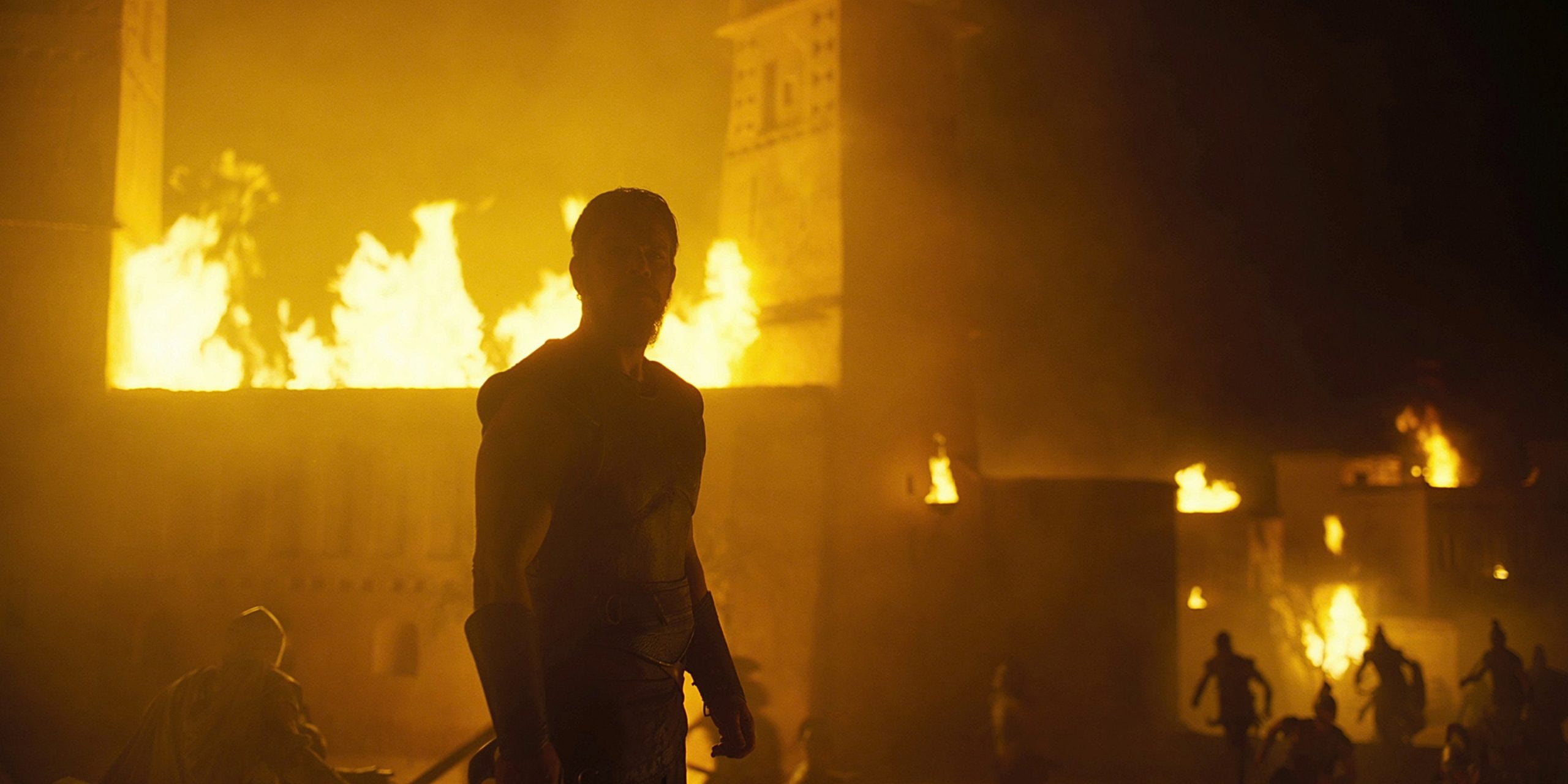
IV. “What if the Odysseus You Knew Had Lost His Way?”
Near the end of the film, Nolan offers his most key contribution to Homer’s text — the scene that recontextualizes the film entire. After Odysseus has returned to Ithaca in the guise of a beggar, he is asked to speak with Penelope. Nolan stages this scene so that Odysseus is speaking to his wife through a screen — a deliberately evocative image, bringing to mind countless confessionals seen across the centuries.
Here, in this moment, Odysseus confesses to Penelope his great sin — the song of all the promises he failed to keep when he left his home for Troy, all those years ago.
What if the Odysseus you knew lost his way? What if...one night, in a strange city, he saw things that made him think the home he knew couldn’t possibly be there anymore. What if…when he left the belly of the horse, and opened the gates of Troy, he saw ten years of rage pour into that city in one night?
We left them a gift, an offering of peace, that they took into their home. We violated all that’s ever sacred between people. It turned a fight into a hunt.
To burn the walls of Troy was to burn the world entire. Including his home.
Nolan takes the story of the Trojan Horse, one of the most famous in all of Western Civilization, and marks it as a tragedy, smashing Zeus’ Law to pieces and breaking the world itself apart as a result. What was presented as a gift was instead a betrayal. In this world, strangers do not bring knives into the homes of those who welcome them in. But, with this trick, all of that was shattered. Violent deeds, violent ends. For all.
Each stop on Odysseus’ journey home reinforces that awful truth. And it is only by confessing his sins, by admitting what he had done and what he had failed to do at Troy and since, that Odysseus can begin to move forward towards a future where Zeus’ Law can be rebuilt again.
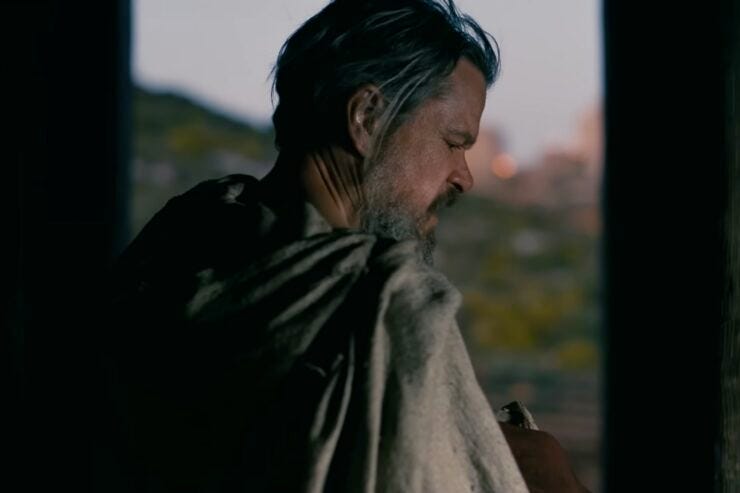
V. “Chasing the Escaping Sun”
At the very end of the film, Odysseus accepts exile after killing all the suitors in his home, taking one last punishment to restore order to his house — and to the world — again. What he has committed, killing men in his own home, violating the laws of hospitality one last time, deserves punishment. One he gladly takes, giving the throne to his son and leaving to head into the unknown West with his beloved Penelope.
This decision plucks the bow of Catholicism one last time with resounding effect. After a good confession, atonement must be made if there is to be any absolution. As they sail into the West, Odysseus fears that his sins and their consequences will be forgotten, but Penelope believes that civilization can be rebuilt again — a task that will fall to the next generation.
All humans fall. But only in the course of accepting our sinful nature, confessing, and making atonement can there be hope for a next generation to do just that. This was true for Odysseus. It is true for us as well.
----------------------
Some of these themes exist in Homer’s original text, but not all — and certainly not interpreted in this manner. Nolan retells the Odyssey in his own distinctly Western way, one born from his own Catholic upbringing. Nolan pulls not only from Homer but from the entirety of Western tradition in his telling, looking to Virgil, to Dante, and yes, even to Augustine. He’s not the first to Christianize Homer’s text — Clement of Alexandria even did so around 200 A.D. — and he won’t be the last.
Does this make for an absolutely pure adaptation of Homer? No, something that I am sure some classicists will take issue with. They certainly took issue with 2004’s Troy, another cinematic retelling of Homer that I also called out for its many liberties, particularly its cynical agnosticism. Nolan, with his take on Homer, takes far fewer liberties, while also retaining the importance of the laws of the gods — but some liberties he takes, nonetheless.
A 1:1 adaptation? Surely not. Maybe not the adaptation some classicists wanted, but the adaptation today’s culture needed. Here, with one of the foundational texts of Western Civilization, Nolan’s current obsession with the story of sin and the Fall of Man (see Tenet and Oppenheimer) reaches its zenith: his Odyssey aches for a salvation that secularism has failed to offer, that can only be found in the divine.
Nolan’s take is a fascinating one, a translation all its own, and one that brings Christian, civilizational values back to the forefront of popular culture. That, truly, is something worth celebrating.

I really don’t understand how people hate on this movie
This is a great write-up. I do also wonder how much Dante's version of Odysseus influenced Nolan's approach to the character, if at all. Obviously he cribbed from outside material such as the Iliad and the Aeneid in this telling; perhaps he went as far as the Inferno, where "Ulysses" is found in the eighth circle of Hell for, among other deceptions, the sin of fraud in devising and deploying the Trojan Horse. I like to imagine Nolan conceiving a version of Odysseus who recognizes that sin while he is still alive, and rather than going down the alternate path Dante creates for him forsaking Ithaca, chooses to return to his family, confess his sins, and atone.