


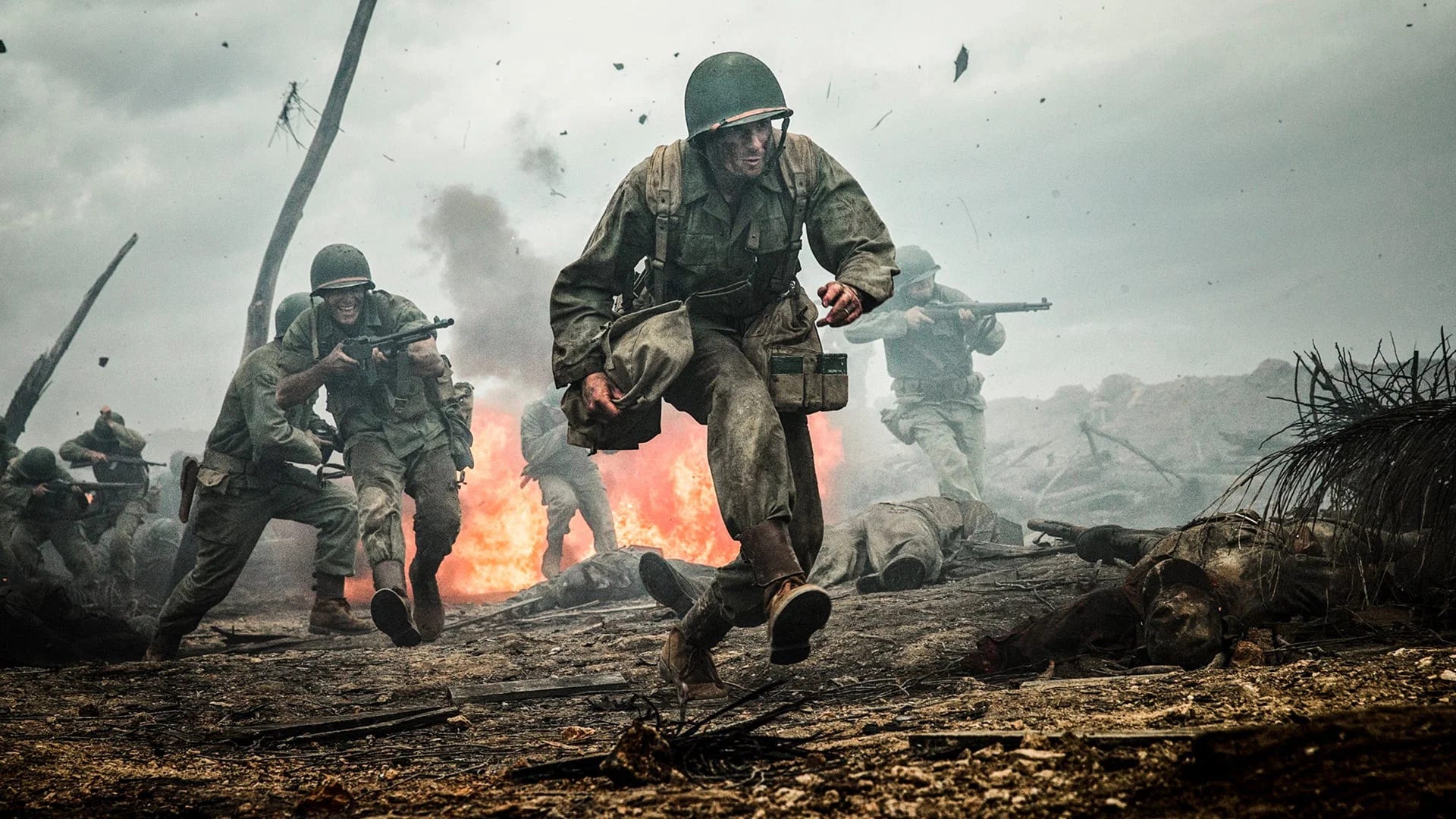
There are many times in my life when I have read about a historical figure and wished there was a movie made about them. This is especially prevalent with Catholic and Christian heroes, from the great martyrs to everyday folk whose remarkable actions changed the course of history in the most edifying ways. Such was the case with the remarkable story of Corporal Desmond Doss, who, in the face of great adversity as a conscientious objector, singlehandedly saved more than 75 men as a medic during the Battle of Okinawa. Awarded the Congressional Medal of Honor for his bravery, Doss’s story had inspired many and was instantly seen as ripe material for the silver screen. Bringing this vision to life would prove to be far more difficult, and the project languished in development limbo for many years.
As fortune would have it, the project found its way to perhaps the best-suited director for the task, one who could truly understand the faith-filled conviction of Doss while not shying away from the horror and carnage he faced: one Mel Colmcille Gerard Gibson. Gibson’s own beliefs had often put him at odds with the Hollywood establishment, leading him to see Doss as a kindred spirit. Hacksaw Ridge would prove to be a pivotal moment in the revival of Gibson’s career, drawing A-list stars and earning several Oscar nominations, including Best Picture. Ever one to wear his heart on his sleeve, Gibson imbued the film with an intense sincerity, combining decades of experience, a healthy budget, and his own personal faith to escape the trap of cliché and preachiness that have plagued many recent faith-based productions. There’s never much doubt about the film’s intentions. Gibson seeks to honor Doss’s story and his strong faith, while showing the horrors he had to face. For a modern film dealing with faith, it does a commendable job of toeing the line between the preachy tendencies of Christian films and the sardonic ambiguity of secular productions examining elements of the faith. Hacksaw Ridge is confident in its message, but it doesn’t let conveying that message trip it up from being a generally well-crafted film with universal appeal. While critics were divided over certain aspects, most expressed admiration for the film’s depiction of integrity, even at great personal cost, and the technical prowess of the production.
Looking at the film briefly through a structural lens, it can be divided cleanly into two distinct sections: a weaker biopic backstory that gives way to a thrilling, combat-centric finale. Gibson takes some liberties with Doss’s backstory to give him a clear motive for his convictions against bearing arms in combat. In the film, Doss’s father is a drunk, haunted by the loss of his childhood friends during the First World War. He constantly threatens Doss’s mother with a firearm, to the point where Doss has to intervene, grabbing the gun and, for a moment, in his anger, allowing the thought of killing his father to cross his mind. From that moment, it is implied that he chooses never to touch a gun again. The real William Thomas Doss was not a violent alcoholic; he had given up drinking and embraced his Seventh-day Adventist beliefs from an early age. Likely, it was the living out of his faith within the family that instilled in Desmond an unflappable conviction in his beliefs. The example of a father’s faith cannot be understated in the formation of his children, and this would have been a powerful aspect to portray. While this was perhaps a missed opportunity, filmmakers face many difficult decisions when working with an adaptation, and the drunken father motif, though cliché, works better cinematically within a two-hour runtime.
The first half spends much of its time painting the backdrop of Doss’s character. In storytelling terms, Doss follows a flat character arc: his convictions are present from nearly the beginning, and throughout the narrative, these beliefs are tested and challenged, ultimately serving to transform those around him. Gibson teeters into the realm of cliché on several occasions, allowing an oversaturated color palette and predictable beats to diminish the impact of the exposition. However, it proves serviceable enough to set up the masterful and cathartic second act.
The most powerful part of the exposition involves Doss’s refusal to succumb to the pressure of the Army to betray his deeply held conscientious objector beliefs. Officers mock him in front of his entire company, bunkmates beat him at night, and a court-martial is enacted. But it is in these smaller moments that the strength of his faith is tested and ultimately proven. As our Lord says in Luke 16:10, “He who is faithful in a very little is faithful also in much.” Having endured these tribulations and remained true to his beliefs, it is no surprise that his faith carried him to great deeds on the battlefield.
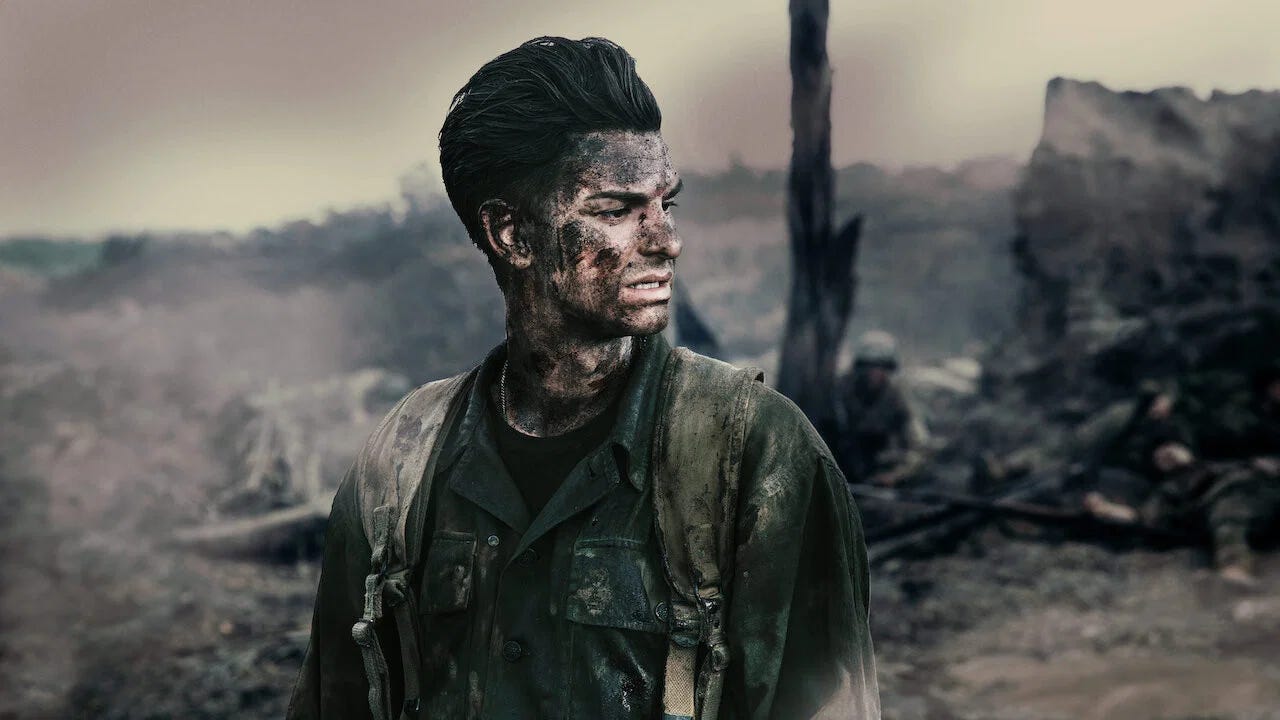
The second half of the film is where Gibson’s prowess as a filmmaker shines, bringing to life some of the bloodiest and most hellish battles in recorded history. Hacksaw Ridge is an impactful film largely because of this final battle sequence. Through the horrific violence, Gibson is able to weave a thread of faith, showing that God is present through the unflappable faith of Doss. In a world that has grown ugly and is filled with so much unmitigated suffering, Hacksaw Ridge presents an image of hope: that God is present and does hear the prayers of those crying out to Him. “One more. Help me get one more,” prays Doss as he crawls back through the carnage of the battlefield, alone and surrounded by Japanese troops, resolved not to leave any of his wounded men behind. Somehow, he finds a way to keep going.
Mel Gibson is never one to shy away from gore, and while many have criticized him for it, he uses it most effectively, juxtaposing the goodness of Doss and his desire to heal and bring comfort (even to a wounded enemy soldier he encounters) with the absolute carnage and rage swirling about him. As Doss states, “With the world so set on tearing itself apart, it doesn’t seem like such a bad thing to me to wanna put a little bit of it back together.” And that is really what this film is about: finding the good in the chaos, not losing sight of God amidst what seems hopeless and ugly, and, most of all, not wavering in your faith, no matter the personal cost or the obstacles thrown one’s way.
Hacksaw Ridge is a film not without its flaws. But it exudes an utmost sincerity, plunging the viewer into a visceral experience of faith and trial, and ultimately showing what is possible when one perseveres in their beliefs. Gibson gives us a faith-based film with some actual substance, generally avoiding the pitfalls that plague preachy contemporary Christian fare. It seems to have struck a chord with audiences across many walks of life and beliefs, earning an impressive 8.1 on IMDb and 4.1 on Letterboxd. Hacksaw Ridge doesn’t attempt to be subtle; it’s straightforward and highly approachable. Despite its high threshold for violence and gore, it may be the most palatable of Gibson’s recent big three. With all that said, it is a most worthy addition to this subsequent iteration of 100 Movies Every Catholic Should See.