


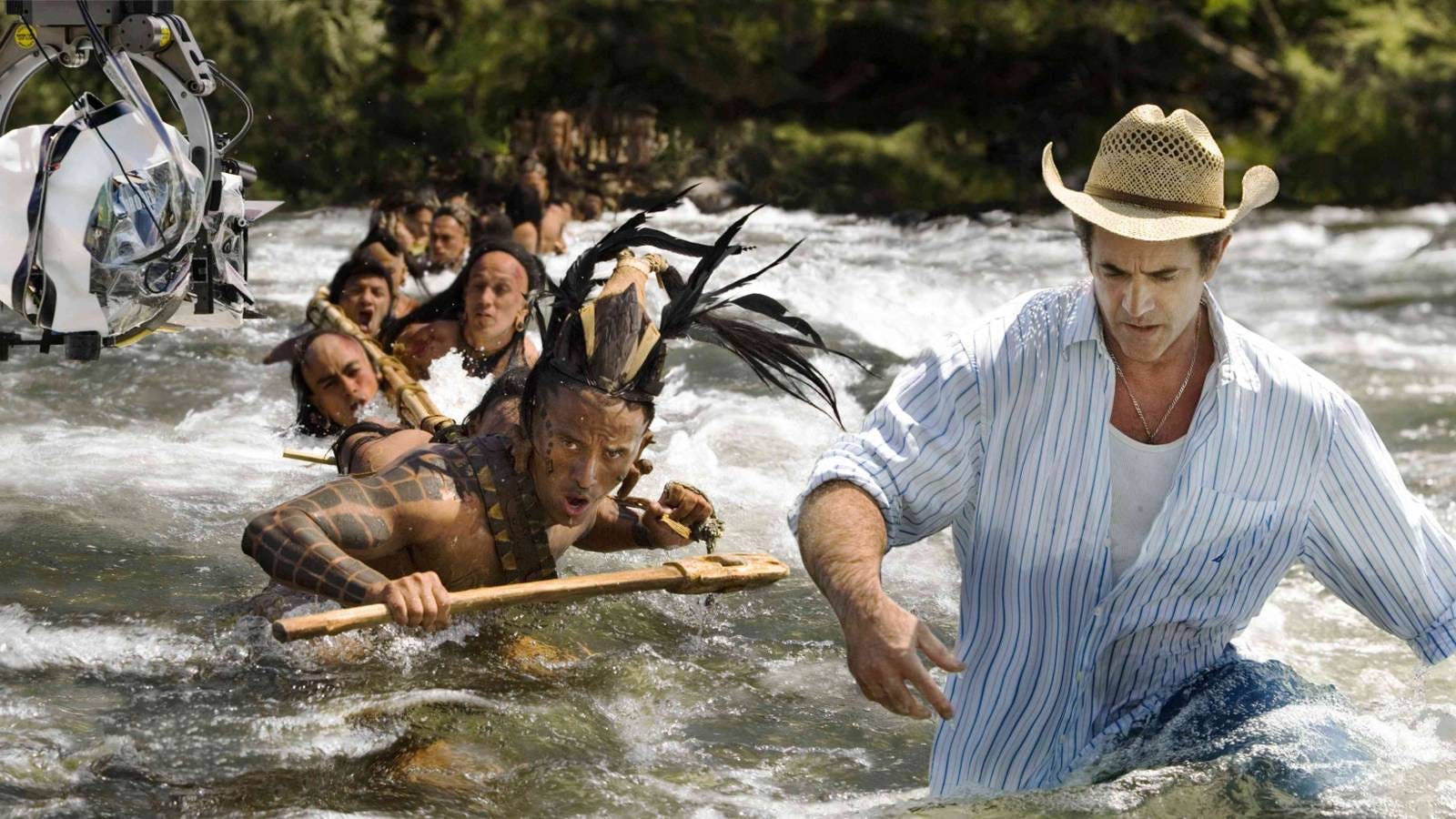
Robert Duvall called it the best film he’d seen in 25 years. Quentin Tarantino called it the best movie of 2006.
This is what Martin Scorsese had to say on it:
Many pictures today don't go into troubling areas like this, the importance of violence in the perpetuation of what's known as civilization. I admire Apocalypto for its frankness, but also for the power and artistry of the filmmaking
The movie also grossed three times its budget and was produced by the Walt Disney Company.
Mel Gibson wouldn’t direct another movie for 10 years.
I mention this to give a window into 2006, the same year that Gibson started to make public comments that would label him a persona non grata in Hollywood and eventually get him blacklisted (and this was in a world before social media). At the time, Gibson was still embraced as the auteur that he very much is, and could get $40 million from The Walt Disney Company of all studios to make an almost dialogue free, R-rated passion project.
Different times.
Twenty years later, though, does the movie hold up?
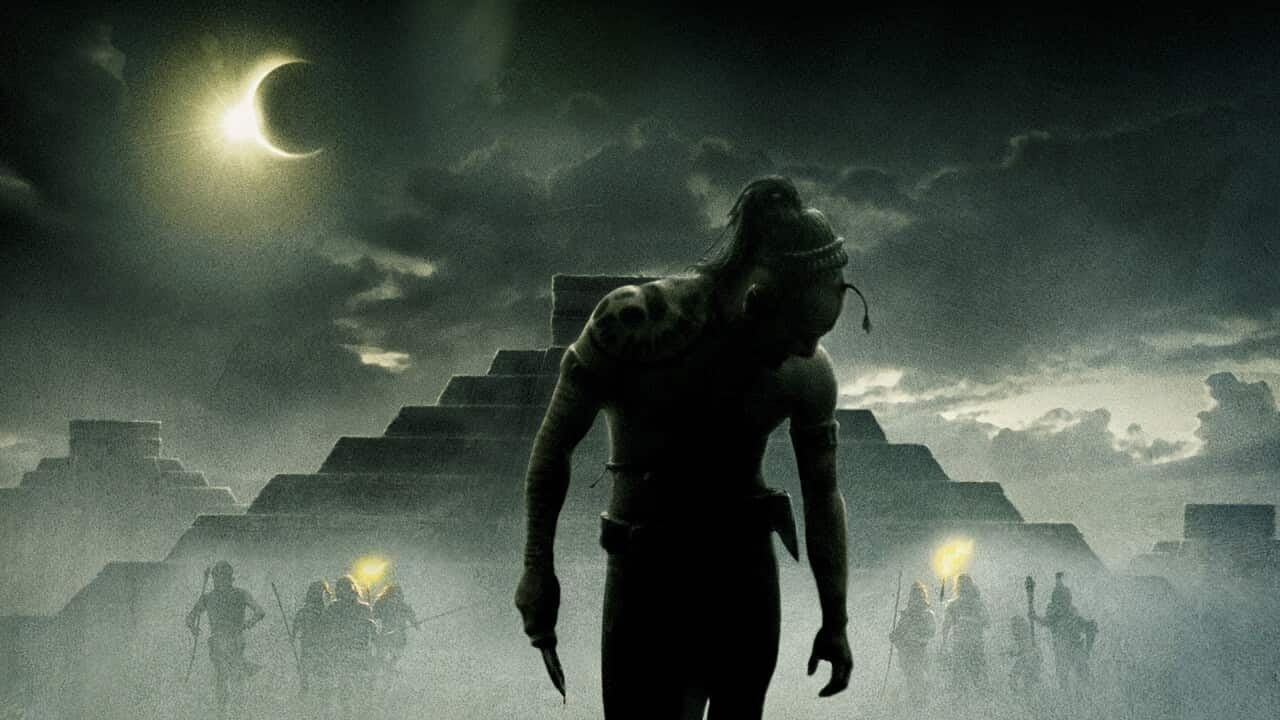
Gibson went in-depth recently on the Joe Rogan podcast (while promoting his latest film, Flight Risk) on the origins of Apocalypto, and it’s what first piqued my interest in seeing the film.
Apocalypto is essentially Mad Max but set in the jungles of ancient Mexico: the pace is relentless as you follow Jaguar Paw (Rudy Youngblood), a tribesman hunter who seeks to save his family from the encroaching, tyrannical Mayan civilization. From about the 45 minute mark to the end, the film is non-stop as Jaguar Paw seeks to survive and eventually hope to escape his imprisonment after the destruction of his village.
As Gibson puts it in the interview above, the constant peril the protagonist goes through has deeper meaning:
Really it’s just a series of fears, one after the other, you know, being chased by scary guys or being eaten by wild animals…but I think basically what I was doing was trying to talk about our time now and the civilization that we live in, and how close are we to collapse?
The film opens (comedically) with one of Jaguar Paw’s friends and fellow hunters, named ‘Blunted’, getting pranked a few times into eating unsavory animal parts and plants on the vain hope that they will help him and his wife conceive a child. Right from the outset, despite the simplicity of their society, the villagers rally together around the creation of life and the continuation of their society. Jaguar Paw’s father, the chieftain Flint Sky (Morris Birdyellowhead) is proud of his son but is wary of the fear that grows in him after an encounter with villagers who narrowly escaped a Mayan raid, leading to this exchange:
FLINT SKY: Those people in the forest, what did you see in them?
JAGUAR PAW: I do not understand.
FLINT SKY: Fear. Deep rotting fear. They were infected by it. Did you see? Fear is a sickness. It will crawl into the soul of anyone who engages it. It has tainted your peace already. I did not raise you to see you live with fear. Strike it from your heart. Do not bring it into our village.
The Mayans, unlike the peaceful villagers, maintain their society through fear, mainly through constant displays of power through daily human sacrifice. Their society is built around a literal culture of death.
How far is our society today from the Mayans?
In a sense, our culture is worse off: as St. Paul writes in Romans 7:7-8:
What then can we say? That the law is sin? Of course not! Yet I did not know sin except through the law, and I did not know what it is to covet except that the law said, “You shall not covet.”
But sin, finding an opportunity in the commandment, produced in me every kind of covetousness. Apart from the law sin is dead.
Both the villagers and Mayans knew not the Law, before the coming of Christianity to the Americas, but those who propagate the culture of death today willfully choose to ignore the law, and therefore can and should be held accountable for their actions.
In a way, Apocalypto acts as a spiritual sequel to The Passion of the Christ, occurring over half a millenium after the events of Christ’s death and resurrection. The way Mel Gibson depicts evil in both movies is very similar: those corrupted by it are always shown to be grotesque, wearing bawdy clothes and excessive makeup. Jaguar Paw and his fellow villagers know not yet the Law or the teachings of Christ, but through natural law come as close as one could get to the Law through synderesis, the concept described by Aquinas as the “innate, infallible habit of the practical intellect that grasps the fundamental, self-evident principles of moral action”.
Jesus Christ died not only for His disciples and the people of Israel at the time of his death, but even for the Mayans who knew Him not (at least not properly through Divine Revelation) for thousands of years. The triumph of His Resurrection extends fully across time and space and is only reinforced through the ending of this film and the triumph over evil.
Apocalypto is probably one of the best movies I’ve watched for the blog, but just know that, like The Passion, it is a difficult watch in terms of the stark violence that is onscreen.
But, as none other than Martin Scorsese puts it, we could use a little more “frankness” in our art today.
Thanks for reading!
Fascinatingly, while watching this movie I found a lot of similar plot and thematic elements to Wes Ball’s Kingdom of the Planet of the Apes. Turns out the movie was initially pitched as “Apocalypto with Apes”. Check out my review of that movie (my favorite of 2024) below. (Available to stream on Disney+)
'Kingdom of the Planet of the Apes' Review

Mild spoilers for the Planet of the Apes trilogy (2011-2017) follow