


How much liberty are you willing to trade for security? How much power should citizens allow the government to amass to keep them safe? Does privacy override a government’s duty to protect its citizens from enemies foreign and domestic?
Quis custodiet ipsos custodes?
Some version of these questions has preoccupied political discussions for centuries, going back at least to Plato’s Republic. Concern has only accelerated in the past 100 years or so as technology has progressed so astoundingly swiftly that the governments of today have surveillances powers far beyond the wildest dreams of those a mere century ago. The rapid shift towards mass communication and mass media have allowed for far greater government surveillance capabilities into the lives of ordinary citizens.
Or at least, so is the fear. Realistically speaking, how much bandwidth can the government commit to an ordinary citizen? Even in the age of AI, the baseline level of attention that can be continuously given to any one citizen must be fairly low. However, when the government does turn its eye towards you, the resulting upheaval is terrifying.
The 1990s were something of a golden age for government conspiracy thrillers. From JFK to Clear and Present Danger to Conspiracy Theory, Americans were constantly seeing their own governmental agencies carrying out shady hits, ignoring collateral damage, and tying up loose on the big screen. Even the first Mission: Impossible film fits this bill, with Ethan Hunt uncovering rogue actors within his own agency. The Cold War was over, so the Russians could no longer be the bugaboo of American cinema; 9/11 was still in the future, so terrorism was not yet a major public concern. What the public was discovering, however, were the wide-ranging, secret, unaccountable activities of three-letter government intelligence agencies, and a chilling thought was running through the American mind: what if the greatest threat to liberty and the American way of life came not from without, but from our own government? From the CIA to the FBI to the IMF, no acronymic arm of the executive branch was safe from Hollywood villainy.
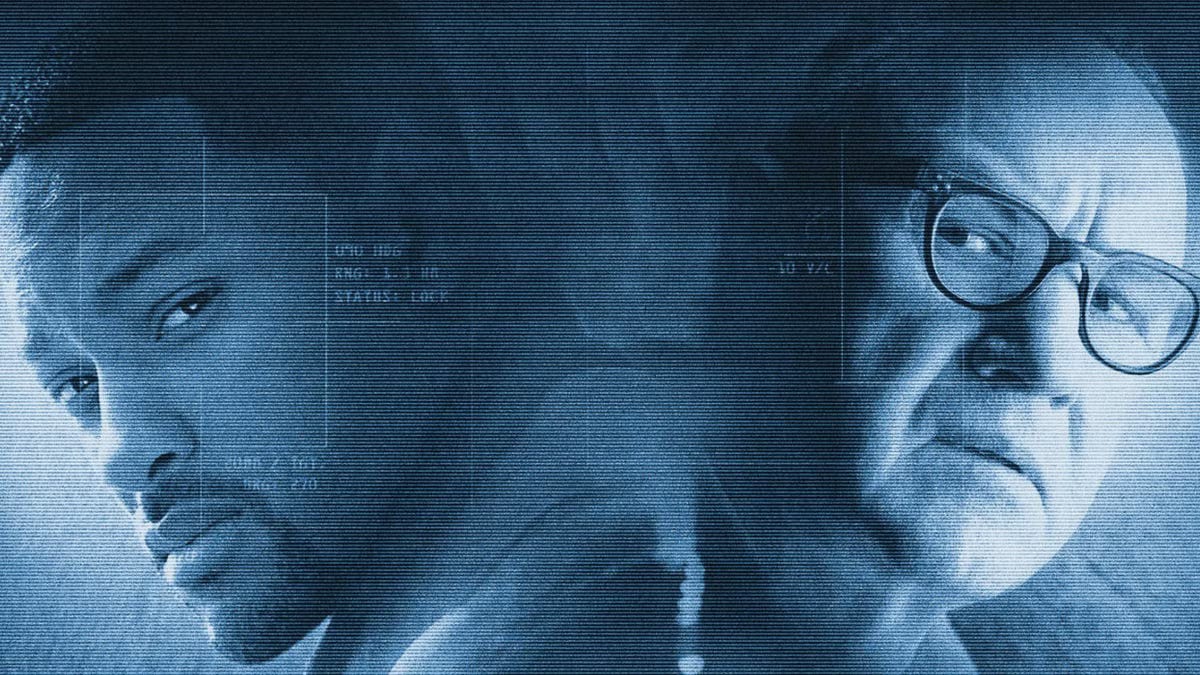
Of all these films, Tony Scott’s 1998 Enemy of the State is the best. It follows the story of Robert Clayton Dean (Will Smith), a DC labor lawyer who inadvertently gets caught up in an NSA plot. A wildlife photographer captures the NSA murdering an opposing congressman on video and drops it in Dean’s shopping bag while on the run. Dean doesn’t even know he has the tape until about two-thirds of the way through the film; the NSA, led by the ambitious Reynolds, sets out to destroy and discredit Dean before he can uncover and share the tape with the media. They smear him in the media, get him fired from his job, tap his phones, install cameras in his house, cancel his credit cards, and sow discord in his marriage. Dean becomes a man on the run, not knowing why or from whom. His only hope to unraveling the mystery lies with the mysterious Brill (Gene Hackman), a reclusive source with inside information that could bring down Reynolds for good.
Although this story is not necessarily original (Alfred Hitchcock made a career out of wrong-man thrillers like this), the execution is what sets this film apart from many of its 90s peers. Tony Scott masterfully switches perspectives on us several times throughout the film, from the voyeuristic NSA agents to the disoriented and paranoid Dean on the run to the point where Dean meets Brill and the tables start to turn. We see through the eyes of both hunter and hunted, following the twists and turns of both sides as they hunt for their respective quarries: the NSA for the videotape and Dean for Brill. The cinematography is perfectly executed, staying slick and cool for the NSA perspective while going handheld, cutting often, and remaining tight on Dean as the walls close in. The whole second act is essentially one long chase scene and is breathlessly executed, dashing about Washington DC as Dean tries and fails to stay one step ahead of his assailants. Once Dean finds Brill, the perspective changes again and we see the hunters become the hunted, a table-turning that feels cathartic after the paranoia we’ve followed Dean through. The central performances are solid, especially Gene Hackman’s Brill, whose irate competence perfectly compliments Will Smith’s frustrated bewilderment. It’s a solid film with enough twists, turns, and clever solutions to put it in the top tier of 90s thrillers.
In addition, however, it grapples more consciously with philosophical questions of power, liberty, and accountability than most of the popcorn thrillers of the 90s. In this way, it ironically feels more like it was written by Tom Clancy than either Clear and Present Danger (a great film) or The Sum of All Fears (a deeply mediocre one). It lands pretty squarely, of course, on the “government surveillance bad” side of the spectrum, but it does at least fleetingly entertain arguments as to why advanced surveillance tools are necessary. It even puts these arguments into Dean’s mouth, before those tools are turned so stunningly against him. There are threats out there in the world, and we do expect our government to protect us against them. But how much power is too much power? When does a shield against foreign aggression become a sword against the common man? As with many films of the patriotic 90s, Enemy of the State punts on this question somewhat by making bad actors within the government the problem, rather than the government itself, but the question remains.
The film adds an additional layer of intrigue to its argument through the character of Brill, who uses the same surveillance techniques against the government to help Dean. Brill also spies indiscriminately on the American public, just out of a warehouse rather than the Pentagon. He gets Dean information early in the film that helps him to bring down a mobster. There seems to be an inkling of an argument for the benefits of surveillance hidden perhaps inadvertently in this character. The film is clear in its condemnation of governmental use of this technology due to its massive power and ability to reach into the lives of its citizens, but seems to gloss over the far-less-powerful Brill’s use of similar methods.
I find this tension in the themes of the film fascinating, and ultimately it points to the need for strong checks and balances on those with power, an accountability mechanism that can restrain the unbridled use of government force on civilians. The inciting incident of the film was Congress about to give up its check on the surveillance state; the events of the film change that decision and leave the citizens, for now, in control of their intelligence agencies.
In the wake of 9/11, the PATRIOT Act, the War on Terror, the rise of the Internet, smart phones, AI, Edward Snowden, the control mechanisms exhibited during COVID, and further revelations about the scope of real world three-letter agency overreach, I wonder if that is still enough.
We hope you enjoyed this free article from 100 Movies Every Catholic Should See! If you liked what you see, please consider becoming a paid subscriber to support independent Catholic film journalism. You’ll receive our Weekly Watches and What’s Good on Streaming series, early access to our podcasts and youtube videos, and sneak peeks at what’s coming next for 100 Catholic Movies and Reconquista Media. Thanks for considering, and God bless!